Mildred Sneigel liked dogs. She had always owned at least one dog, even before her husband had died. Her dogs tended to be lapdogs, smaller, terrier-sized breeds that she could easily care for, groom, and converse with. Cats were another story and the two little girls who lived across the alley knew it.
One morning, on the kind of lazy summer morning that allowed them to stay in their pajamas longer than they should have, the younger of the little girls was playing with her older sister in their backyard when they heard the old woman across the alley talking.
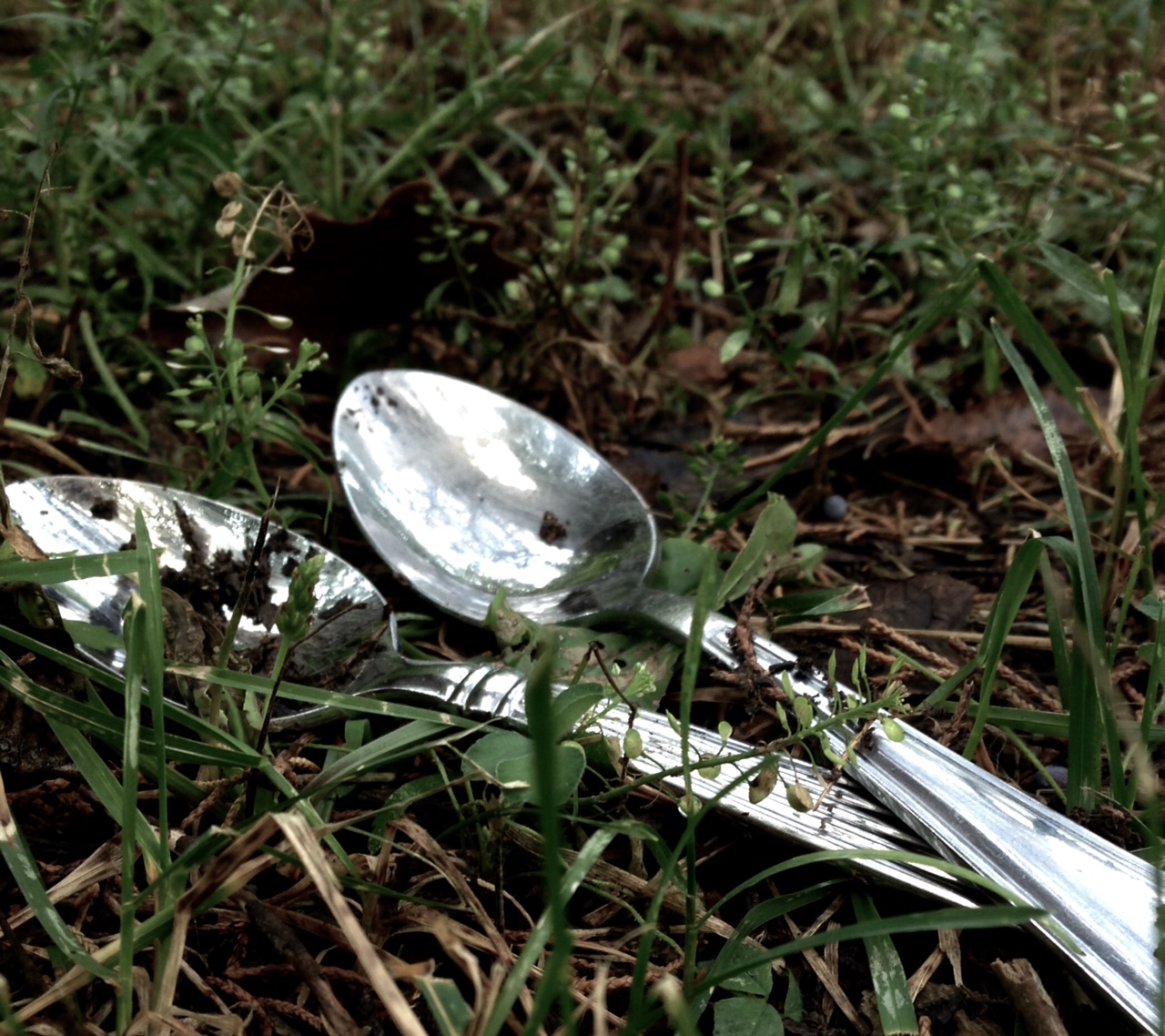
They dropped their spoons into the mud and crawled on the damp grass each to the base of a skinny poplar tree. They listened.
The old woman said “Good doggy,” and “Be a good little doggy.” She carried a shovel and took small steps around her own backyard in her gray rubber rain boots and long, floral raincoat. Her head bobbed among the wisteria and rose bushes and was enveloped in a clear plastic headscarf, the kind that folds up into the size of a business card and then has a little snap to keep it all together.
The girls, who were not naturally inclined to torment others, nevertheless chose to torment Mildred Sneigel on this particular morning. If only they had known her better.
Their plan: crouch beneath their respective poplar trees, send meows into Mildred’s backyard, wait for her response.
At first, the sounds they made were the tiniest, tenderest of mews, the sort you might hear from a three-day-old kitten. Mildred gave no response, continuing to scrape at the topsoil to the right of the iris patch with a rusty, claw-shaped hand rake. No fun.
Then, their mews became bolder, less tender, akin to the sounds one might hear from a gangly, mildly dissatisfied teenage cat. With this, Mildred paused and looked into the branches of the elm tree above her. That was better. The girls’ eyes met and they stifled their mouths into shrugged shoulders.
Then, the older sister took the lead and lobbed the final grenade. What began as a tiny kitty mew lengthened into a quite realistic, prepubescent meow, which evolved into the gruff, gravelly howl of a geriatric feral tomcat. The duration of the meow was impressive. Its tone rose and dipped and curlicued around the older sister’s tongue, into her chest and then out through her mouth, which guzzled with silent laughter as she collapsed into a ball on the dewy grass.
By that time, her younger sister was also engulfed in secretive, red-faced laughter. Her cheeks streamed with tears. Dirt plastered the two sisters’ knobby knees and legs, grass clippings mingled in their bangs, and tears and dew dampened their pajamas.
That final lob did the trick. Mildred’s eyes tore over her shoulder, she raised her claw, and she stomped in her rubber boots to the back edge of her yard, headed directly for the girls’ poplar tree seclusion. She scanned the length of the lot, and stooped to peer into the darkened rows of shrubbery, weeds, and decrepit lawn ornaments frosted with molds and lichens.
“Out of my yard, you cats!” she barked. “Out.”
Seeing no feline trouble-makers, she stood back up, transferring the hand rake to her other hand. “Just leave,” she spoke quietly into the shade.
She returned to the iris bushes and settled to her knees. She patted the soil with her hands, and leaned into the earth. The girls, who had by then righted themselves to their spying positions, watched Mildred pull two wooden paint-stirrers from a nearby bushel basket. She arranged the slats into a cross and then held it together with one hand, while the other rummaged through the basket and pulled from it a length of wire and a pair of wire cutters. She wound the wire around the center of the cross several times to secure an “X” and then with a click, snipped the wire in two. She gently submerged the base of the cross near the far end of the little plot of soil. “Good doggy,” she said. “You were such a good little doggy.”
The girls watched in silence, then glanced at each other. Their glee turned to regret, and grief, too, since they had remembered seeing Mildred’s little dog prancing about the yard following its owner.
They stood, brushed off their dirty knees, straightened their pajama tops, and went back inside their house to change. They left their spoons in the drying mud.

 Marilyn Yung