Finally, I’ve found a city I can trust myself with — Ravenna, Italy.
I didn’t mean to fall in love. I wasn’t looking for someone new. I had never even heard of Ravenna until I went to Italy.
But, Venice, I’m torn. In so many ways, Ravenna attracts me.
It’s untouristy. Affordable. Strangely familiar.
And yes, I’ll admit that although our relationship was brief and passionate, it has withstood the test of time, Venice. After all, I still long for your watery passageways and roaring, rushing boulevards. I fantasize over your shimmering lagoon and all those glossy gondolas slicing through the wakes of vaporettos, taxis, delivery boats.
But Ravenna, well… Ravenna is different. It grounds me. Located just three short hour away from you by train, its rugged stability thrills me in a comfortable, predictable way.
Finally, I’ve found a city I can trust myself with.
Ravenna is real. For one thing, there are cars. There are people looking right and left. There are horns blaring instead of gondoliers chanting gondullah gondullah gondullah.
In Ravenna, the sights are spectacular, seductive, strong, and silent. And a quick glance in any guidebook shows that my new love interest holds thirty more palazzo and churches from antiquity.
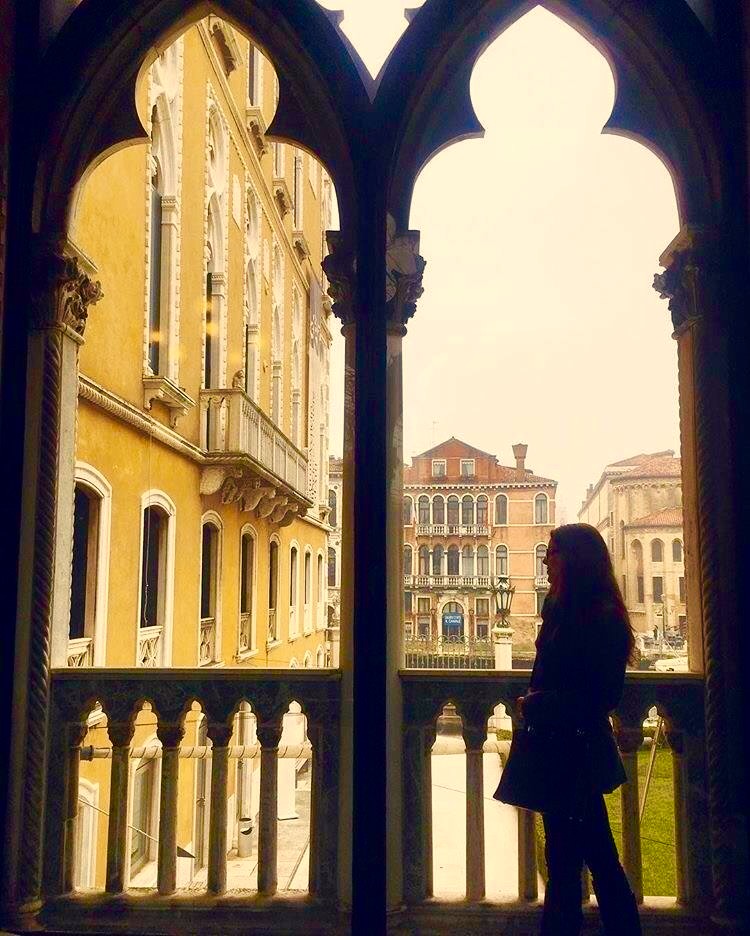
Photo: Katherine Yung
Frankly, Venice, I never thought I would say this, but I see a future in Ravenna, but not necessarily in you. I fear you’re too exotic for a long-term relationship.
After all, I’ve stood in St. Mark’s, your gold-drenched basilica. I’ve felt the reflections from the ceilings and walls warm first my cheek, my neck and then my shoulders as the afternoon sun dipped below the Adriatic. In fact, you’re so beautiful it terrifies me.
What am I leaving out? Oh, your cruise ships. Your crowds. Your selfie-stick vendors on the Accademia Bridge.
And that’s another reason why I’m torn, Venice. You make me dizzy with love and desperate with doubt at the same time. Have those annoying tourist trappings driven me away?
Four words: Possibly and I’m sorry.
Despite your glamour, Ravenna captivates me. This quiet city has stolen my heart with its own brand of starry-eyed elation. Its warm, steady embrace just feels right.
Thanks for reading! Have you been to Ravenna, Italy? Have you ever traveled somewhere only to find a hidden gem you weren’t expecting to find? Feel free to leave a comment!
It was scary to think how much time and effort this man had put into his actions that night.
Imagine being 22, female, and in Venice, Italy for a three-month internship at the Peggy Guggenheim Collection, a small, yet world-renowned modern art museum located on the Grand Canal. At 2 a.m. on the day your father plans to leave after helping you get settled for a week, you notice that the motion sensor outside your door is lighting up frequently. Too frequently, in fact, for this time of night. In addition, some of the lights are brighter than others. That’s odd.
You also hear strange noises outside. You ask your father to check the exterior heating/AC unit that you assume must be malfunctioning. He discovers not a malfunctioning appliance, but a rickety lawn chair that someone has been using to stand on so they can peek inside your apartment.
The peeping tom had made his first appearance earlier that evening, after dark around 7:30. My daughter’s landlord–let’s call her Maria–had come over to help with the t.v. reception and while they were making adjustments, my husband and daughter had both noticed someone outside the apartment loitering in the walkway. They discussed the strange loiterer, but Maria eventually dismissed him, explaining that he was likely just someone from the neighborhood who was curious with the activity in the apartment since it had been vacant for quite some time.
So, in the middle of the night, when my husband ventured outside to check on the furnace and instead found a rickety chair, and a man with frizzy, shoulder-length hair rounding the corner about thirty feet down the corridor, real concern set in. Trying to assess the situation, my husband walked further down the corridor and noticed another lawn chair that had been stepped through around the corner. My husband immediately called Maria, who then immediately called the polizei.
While they waited for Maria and the police to arrive, both my husband and daughter tried to make sense of it all. Upon reflection, they both figured the peeping tom had ruined his first chair while peering in the window, and gone to retrieve another. My daughter also realized that the brighter lights from the motion sensor were more than likely flashes from a camera. Did he deliberately walk back and forth often enough to cause the motion sensor light to camouflage the camera flashes? It was scary to think about how much time and effort this man had put into his actions that night.
Fifteen minutes later, three uniformed police officers were there assessing the situation. Then, unbelievably, the frizzy-haired man sauntered by. Actually, because of the way the walkway turned, there was no way for him to avoid the small gathering without looking suspicious. He tried to play it cool, his camera hanging from his neck.
When my husband recognized the man, he nodded to the police officers who stopped the man and asked what he was doing out so late at night. He replied that he was a photographer taking night shots of the city.
Maria didn’t stand for it. Her Italian temper flared and her arms waved in anger. She accused him of spying and told him to leave the neighborhood and never return. She informed him that a police report was being filed at that moment and if anything happened later, he would be sorry. He was never seen again.
Although this was incredibly scary for me to hear about back in Missouri, it was good to know that, in general, Venice is a quiet municipality known to be “one of Italy’s safest cities.” The full-time resident population in the historic city center has declined dramatically in recent years, and today rests at about 55,000. We had researched the city’s crime statistics before our daughter left on her trip and were reassured. What causes the most trouble for the millions of tourists who visit each year? Pickpockets. What about violent crime? According to Frommers, it’s considered rare.
The next day, my daughter actually considered returning home; maybe this adventure was too much to take on and this incident was a sign that it just wasn’t meant to be. After an anxious day of pondering her options, she decided to stay; however, she did want to find a different apartment.
After attempting and failing to find an alternative rental with the help of my husband (who postponed his return flight for three days), my daughter returned to her original apartment, where Maria assured her she would be safe.
Still, my husband and my daughter took a few precautions. Before leaving, my husband helped her cover the windows with white paper. They figured that if a peeping tom had no view, there would be no temptation. They also made a point to meet the older woman, a Venetian native, living just across the passageway.
Over the next weeks, my daughter got on with her new Italian life. She began working a routine schedule at the museum and truly felt comfortable and at home there. She made many international friends. She became more brave and confident in her new surroundings.
Gradually, her strange experience became a distant memory. Most importantly, she didn’t let the peeping tom’s bad behavior define or detract from one of the most valuable experiences of her life so far. It had been a rough start, but she was determined to thrive.
Thanks for reading! If you found this post interesting, click like so others may more easily find it. Also, feel free to leave a comment on your own strange travel experiences.
While I was surprised to learn that 16.5 million people visit Venice, Italy each year, I was even more surprised to learn that the city claims a mere 55,000 permanent residents, according to this article in The Guardian. That’s 300 tourists for every resident.
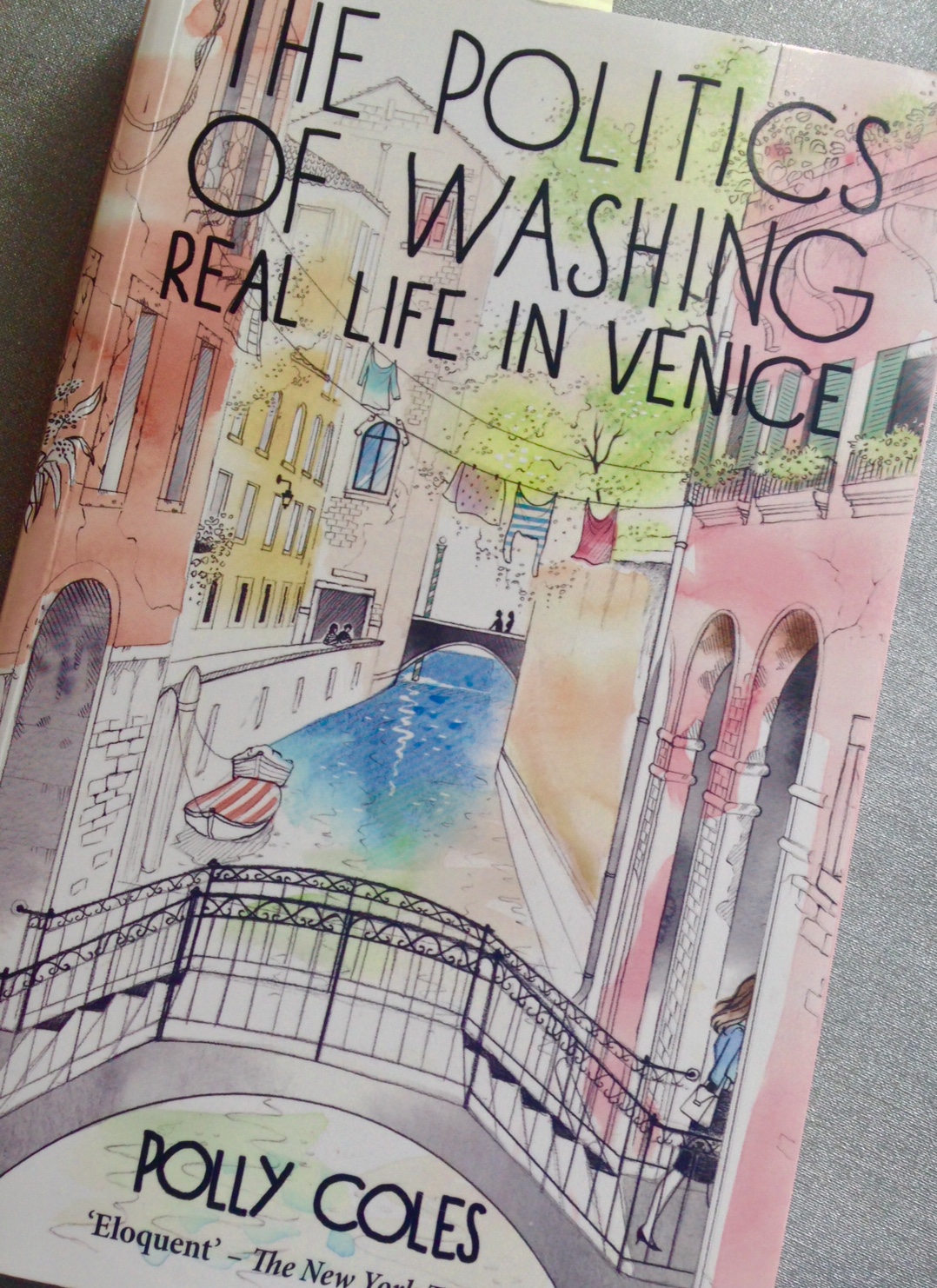
With numbers like those, I can see why Polly Coles, British author ofThe Politics of Washing may share the despair of native Venetians when she calls for moderation and sustainable solutions to the problems that unbridled tourism creates in a city many believe to be among the most beautiful in the world. Those sentiments are dispersed throughout Coles’ 206-page tome, an account of her year-long move to Venice with her Italian husband and four children.
Coincidentally, the title of the book refers to the unspoken rules of laundry etiquette in a city where everyone hangs their clothes out to dry. For example, if you’re sharing a line, and it’s full of your neighbor’s dry clothes, do you ask them to empty the line? What clothing items should you dry indoors? What if the skirt you wish to hang blocks your neighbor’s view?
Coles uses the drying of laundry as a symbol for the many rituals of daily Venetian life that, as a foreign-born resident, she was required to discover haphazardly, adapt to, accept, and ultimately appreciate about this unusual city. For example, she recounts enrolling her children in school, meeting with teachers to discuss school work and behavior issues, finding a home, getting lost, learning the social customs and morés, learning Italian, buying groceries, getting lost again, and visiting the hospital.
My daughter purchased Coles’ book on a whim a few days before she left Venice in early May after serving a semester-long internship at the Peggy Guggenheim Collection, a modern art museum located on the Grand Canal.
My husband, our son, and I visited Venice for one week in March over spring break. While it was an all too brief vacation, we actually spent more time there than the day-trippers who take a gondola ride, visit St. Mark’s Square, call it good and leave. I feel that we were able to actually get to know the city, at least a little. (Read my lists of ten ordinary things I found in Venice in March here and here.)
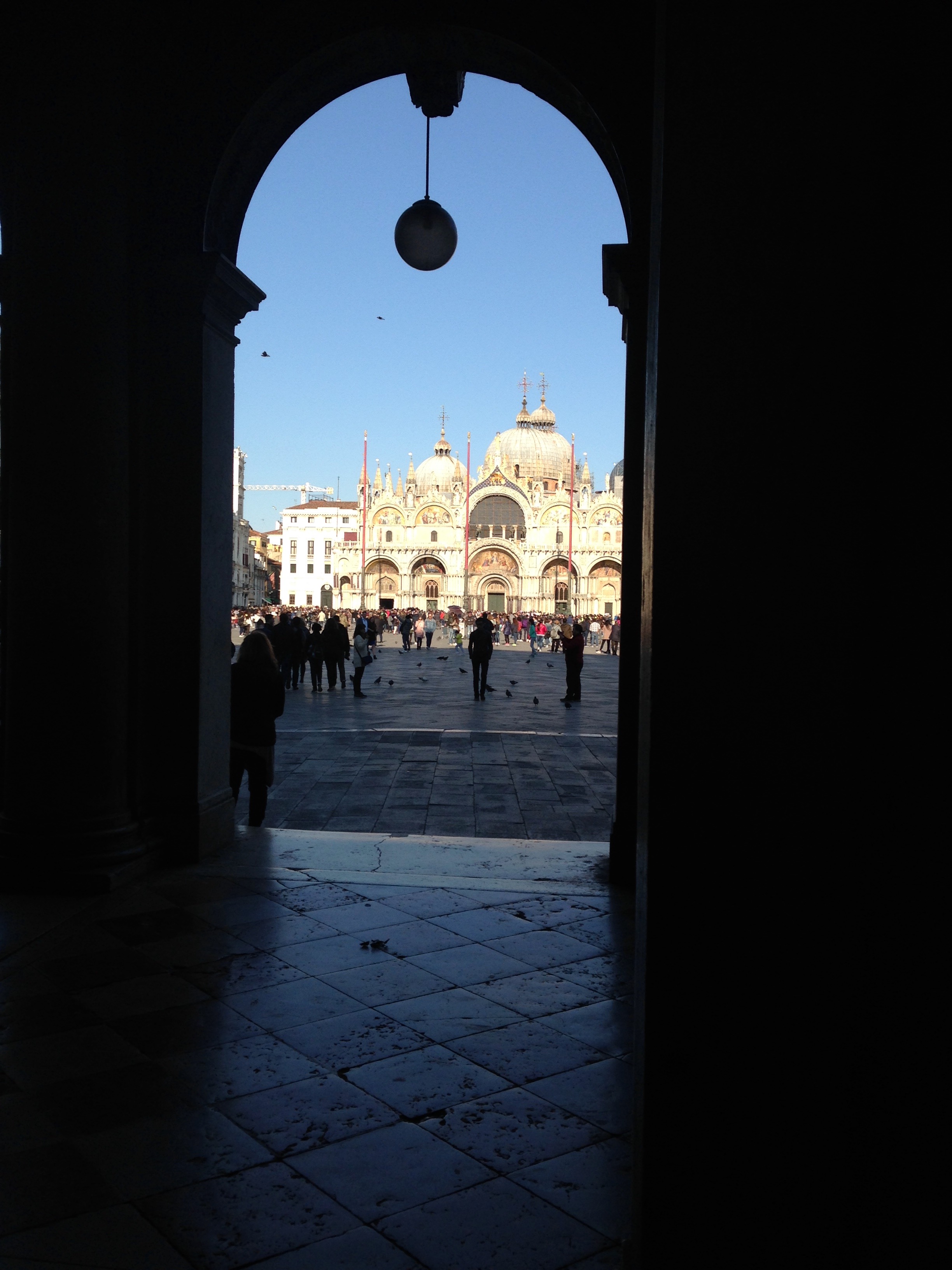
The approach to St. Mark’s Square and Basilica
We enjoyed winding through Venice’s maze of streets (actually walkways) and crossing its bridges to see cathedrals and numerous campi, those open squares that at one time served as city centers of the assorted islands that compose Venice. We visited the grocery store daily, shopped the pharmacy for an Ibuprofen equivalent, accompanied my daughter to get her hair cut and styled, ventured out at 5:45 a.m. for the train station, bought Clementine oranges at the Rialto Bridge markets, and shopped for Command strips that were never found.
If we had been able to stay a week longer, I would have sought out a library, found the local university, and asked someone what happens if one has a heart attack or other medical emergency. (Seriously, what’s the procedure in a city without cars, motorcycles, or even bicycles?)
So when I found The Politics of Washing on the kitchen table after my daughter had returned home, I grabbed it and read it in just a few sittings to learn about how native residents live in this “movie set” city.
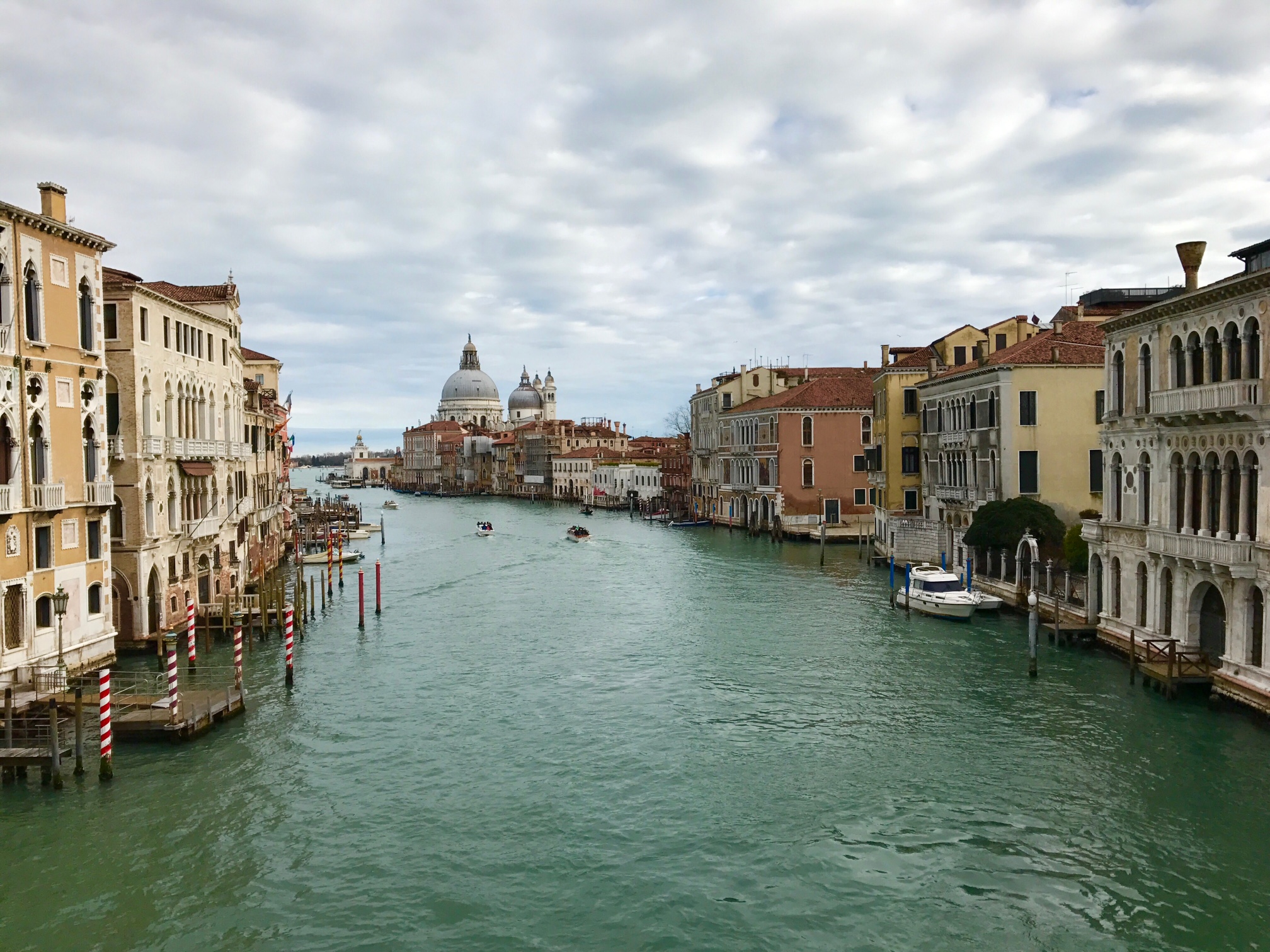
Besides satisfying that curiosity, the book offers glimpses of Venice’s history as a wealthy trading link between East and West that reached its height in the late 1200s. It also recounts the city’s survival in the 1630s of the Black Death that’s still celebrated with an annual pilgrimage to the iconic and beautiful Santa Maria Della Salute.
At end of the Grand Canal stands Santa Maria Della Salute. Photo: Katherine Yung
Coles balances this history by showing readers Venice’s contemporary citizenry and its “groups and committees promoting local events and activities. There are youth groups, community groups, dance companies, theatre companies, choirs, rowing clubs. There are associations working for residents to change policy on housing, transport, the environment. Events that come from outside are also, of course, part of the real life of the city. The rich influx of the arts is enthusiastically embraced by many of the people who live here; the Biennale exhibitions, visiting speakers, concerts, opera and theatre are all part of the lives of Venetians.”
Coles continues, “But the difference between Venice and any other city, the reason why there is so much sensitivity and debate about what is and is not Venetian, lies in the uniquely critical problem of numbers. The citizens of Venice are so vastly outnumbered by the visitors to Venice that there is no balanced relationship between the city and the world at large. There is no equal exchange in which the city offers up her history, and her beauty in return for the cultural riches brought in from the outside world. Not surprisingly, this leads to a deeply ambivalent, not to say confused, reaction to outsiders.” This is the delight and the quandary that Coles reveals in this captivating tale of her temporary life in Venice.
As rushed tourists ease away from the magical city on their mammoth cruise ships, I hope that they will have spent at least enough time there to cause them to wonder, What’s it like to actually live in Venice? When those tourists read The Politics of Washing, they’ll learn just that, as well as gain an appreciation of the benefits and costs of tourism to this ancient, sparkling city on the Adriatic Sea.
Last December 2, I backed out of the driveway headed for the rural middle school in southwestern Missouri where I teach language arts. It was 7:02 a.m. My phone rang. I saw it was my daughter. Awfully early to get a call. I wondered whether something was wrong.
“Mom!?”
“Yeah, what’s going on?”
“I got the internship!” My heart soared. Two months earlier, she had applied for an internship at the Peggy Guggenheim Collection, a modern art museum in Venice, Italy. She would venture to the beautiful floating city to undertake museum duties such as guarding masterpieces, giving presentations, hosting tours, and sculpture cleaning from Feb. 2 to May 2.
She was beyond excited. So was I, but now that her acceptance was official, it was impossible to imagine her moving to a foreign country and working for three long months away from her home, her language, her friends, her family, her life. The night she received the acceptance email, I lay in bed and cried.
I simply could not see it happening. but it did. True, it was a rough transition for everyone at first, but we made it, and it was a beautiful, life-changing experience… for her and me.
And let’s be honest, I realize this isn’t intimidating for everyone. Many kids and their parents have no problem doing this type of thing; however, for Midwesterners like us, just traveling to the coasts of the U.S. is a major excursion. In our eyes, Venice might as well have been Venus.
Internships that pay, like my daughter’s, are popular and highly valued. Study abroad programs are also. Should you ever be so fortunate as to have your child venture out alone on a similar endeavor, here are some tips to get you through it.
1. Be Strong. Even though I was excited, I was also scared for her, but I couldn’t let my reservations known. I had to be strong and encouraging because I knew that deep down she likely had reservations as well. Even though living in Italy and this particular internship had been her dream ever since we discovered it on Google, interrupting her college career and moving to a foreign country would definitely be outside her “comfort zone.” I had to show I was positive about this opportunity.
2. Send your spouse to get her settled. This was my first and best idea. My husband would fly over with her in January to help her get settled and accustomed to her new home. After all, she had never been to Italy, or even Europe for that matter. She had traveled with our family to South Africa five years earlier, and with a group of other college students and veterans to Vietnam in 2015. But Italy? For three months? Alone?
3. Make sure she doesn’t stand out. We Americans like our colors. Once my husband realized her bright floral umbrella could be spied far ahead through a crowd, he purchased her a black one. In looking at her Facebook posts that first week, I noticed her eye-catching, crimson-red purse. I texted my husband to make sure to get her a black one of those, too. Maybe we were being overly protective, but after watching a few Youtube videos of tourists and residents walking around Venice, we knew the city is a labyrinth of narrow, sometimes dark, walkways interspersed with those picture-perfect canals. No reason to look like an outsider, especially if you’re female.
4. Use technology. Numerous Facetime calls, the app People Tracker, Facebook, and Instagram made Italy seem not quite so far away. She started a blog called “From Venice with Love” that kept her in touch with friends at home. Happily, her work and social schedule quickly filled her time, and posting to Facebook and Instagram became more convenient.
5. Send a care package. We waited a couple of weeks, but then sent things from home she couldn’t find there. For example, the Venice grocery stores she frequented didn’t carry American basics such as Ranch salad dressing or pancake syrup. Peanut butter is hard to find. So are Ziploc bags.
6. Visit. If possible, visit for a short time about halfway through. This helped me understand the new lifestyle my daughter was experiencing. Her pictures and posts made more sense and I gained a new appreciation for the life-changing time she was having. Plus, it was Venice, people. We had to.
7. Break the trip into “chunks.” This made the trip seem more “doable.”My daughter’s internship broke down into three parts: one five-week period after my husband left, one weeklong chunk when we would visit, and finally one six-week chunk. Honestly, this last part flew by for both my daughter and I as she was finally comfortable and confidently knew her way around the city.
8. Pray. I relied on this daily. It was a great comfort to know that He would protect and care for her continually.
My daughter’s Venice experience was indeed life-changing. She now has an international set of friends she keeps up with daily through What’s App and she can’t wait to return and tour southern Italy. Her internship also confirmed her next steps: to complete her bachelor’s degree in Art Education and then pursue a master’s degree in Art History with the intention of working in a museum setting someday. She is already filling out applications for another overseas internship. I, on the other hand, am writing myself a note to re-read this post when she lands it.





 Marilyn Yung