Categories
Italy (Venice) Motherhood

My daughter and the peeping tom of Venice, Italy

It was scary to think how much time and effort this man had put into his actions that night.

Imagine being 22, female, and in Venice, Italy for a three-month internship at the Peggy Guggenheim Collection, a small, yet world-renowned modern art museum located on the Grand Canal. At 2 a.m. on the day your father plans to leave after helping you get settled for a week, you notice that the motion sensor outside your door is lighting up frequently. Too frequently, in fact, for this time of night. In addition, some of the lights are brighter than others. That’s odd.

You also hear strange noises outside. You ask your father to check the exterior heating/AC unit that you assume must be malfunctioning. He discovers not a malfunctioning appliance, but a rickety lawn chair that someone has been using to stand on so they can peek inside your apartment.

Read more about my daughter’s internship experience here.

The peeping tom had made his first appearance earlier that evening, after dark around 7:30. My daughter’s landlord–let’s call her Maria–had come over to help with the t.v. reception and while they were making adjustments, my husband and daughter had both noticed someone outside the apartment loitering in the walkway. They discussed the strange loiterer, but Maria eventually dismissed him, explaining that he was likely just someone from the neighborhood who was curious with the activity in the apartment since it had been vacant for quite some time.

So, in the middle of the night, when my husband ventured outside to check on the furnace and instead found a rickety chair, and a man with frizzy, shoulder-length hair rounding the corner about thirty feet down the corridor, real concern set in. Trying to assess the situation, my husband walked further down the corridor and noticed another lawn chair that had been stepped through around the corner. My husband immediately called Maria, who then immediately called the polizei.

While they waited for Maria and the police to arrive, both my husband and daughter tried to make sense of it all. Upon reflection, they both figured the peeping tom had ruined his first chair while peering in the window, and gone to retrieve another. My daughter also realized that the brighter lights from the motion sensor were more than likely flashes from a camera. Did he deliberately walk back and forth often enough to cause the motion sensor light to camouflage the camera flashes? It was scary to think about how much time and effort this man had put into his actions that night.

Fifteen minutes later, three uniformed police officers were there assessing the situation. Then, unbelievably, the frizzy-haired man sauntered by. Actually, because of the way the walkway turned, there was no way for him to avoid the small gathering without looking suspicious. He tried to play it cool, his camera hanging from his neck.

When my husband recognized the man, he nodded to the police officers who stopped the man and asked what he was doing out so late at night. He replied that he was a photographer taking night shots of the city.

Maria didn’t stand for it. Her Italian temper flared and her arms waved in anger. She accused him of spying and told him to leave the neighborhood and never return. She informed him that a police report was being filed at that moment and if anything happened later, he would be sorry. He was never seen again.

Although this was incredibly scary for me to hear about back in Missouri, it was good to know that, in general, Venice is a quiet municipality known to be “one of Italy’s safest cities.” The full-time resident population in the historic city center has declined dramatically in recent years, and today rests at about 55,000. We had researched the city’s crime statistics before our daughter left on her trip and were reassured. What causes the most trouble for the millions of tourists who visit each year? Pickpockets. What about violent crime? According to Frommers, it’s considered rare.

The next day, my daughter actually considered returning home; maybe this adventure was too much to take on and this incident was a sign that it just wasn’t meant to be. After an anxious day of pondering her options, she decided to stay; however, she did want to find a different apartment.

After attempting and failing to find an alternative rental with the help of my husband (who postponed his return flight for three days), my daughter returned to her original apartment, where Maria assured her she would be safe.

Still, my husband and my daughter took a few precautions. Before leaving, my husband helped her cover the windows with white paper. They figured that if a peeping tom had no view, there would be no temptation. They also made a point to meet the older woman, a Venetian native, living just across the passageway.

Over the next weeks, my daughter got on with her new Italian life. She began working a routine schedule at the museum and truly felt comfortable and at home there. She made many international friends. She became more brave and confident in her new surroundings.

Gradually, her strange experience became a distant memory. Most importantly, she didn’t let the peeping tom’s bad behavior define or detract from one of the most valuable experiences of her life so far. It had been a rough start, but she was determined to thrive.


Thanks for reading! If you found this post interesting, click like so others may more easily find it. Also, feel free to leave a comment on your own strange travel experiences.

Categories
Italy (Venice) Reviews of Books/Music/Films

What’s It Like to Live in Venice?

While I was surprised to learn that 16.5 million people visit Venice, Italy each year, I was even more surprised to learn that the city claims a mere 55,000 permanent residents, according to this article in The Guardian. That’s 300 tourists for every resident.

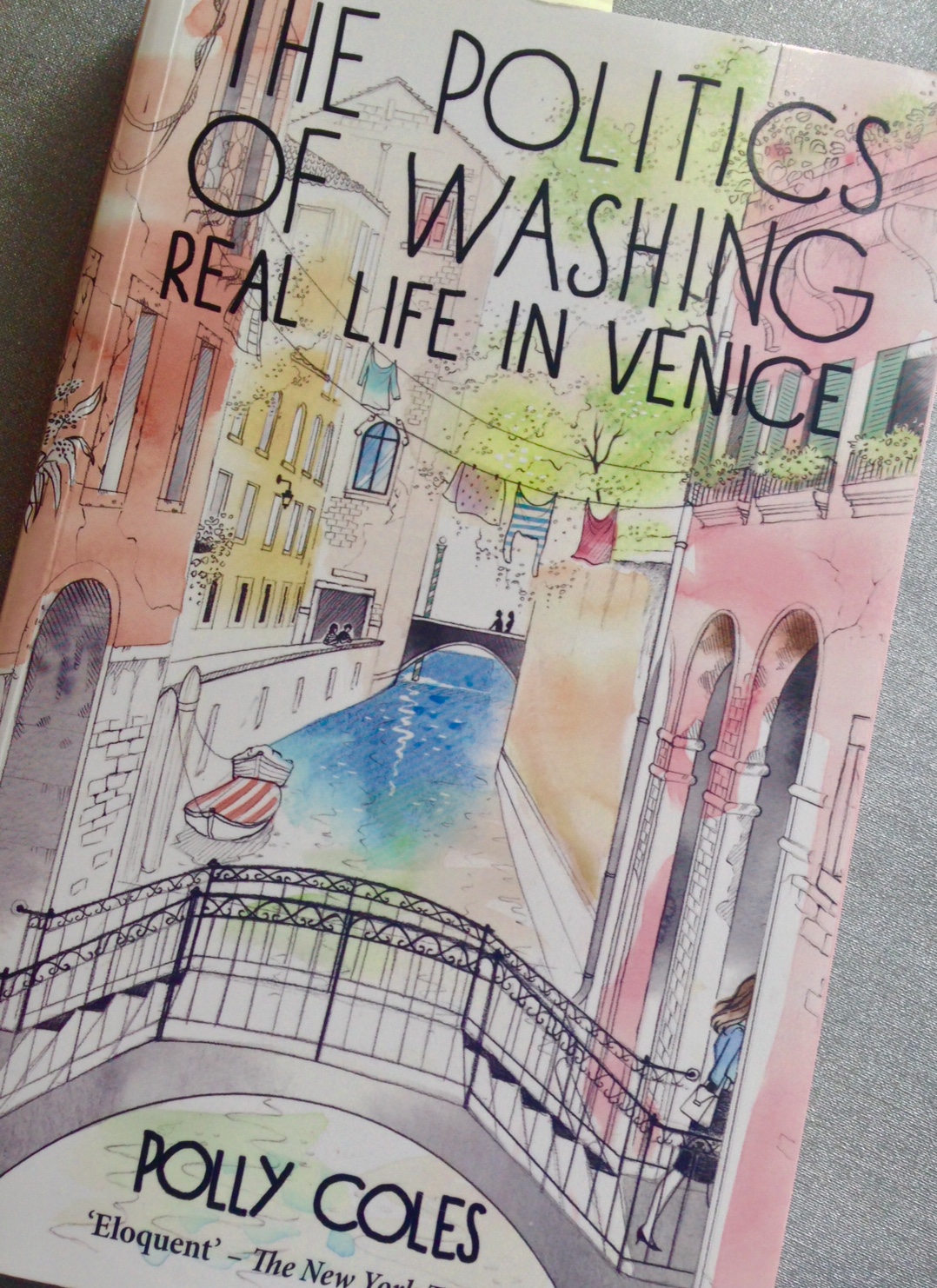
With numbers like those, I can see why Polly Coles, British author of The Politics of Washing may share the despair of native Venetians when she calls for moderation and sustainable solutions to the problems that unbridled tourism creates in a city many believe to be among the most beautiful in the world. Those sentiments are dispersed throughout Coles’ 206-page tome, an account of her year-long move to Venice with her Italian husband and four children.

FullSizeRender (14)

Coincidentally, the title of the book refers to the unspoken rules of laundry etiquette in a city where everyone hangs their clothes out to dry. For example, if you’re sharing a line, and it’s full of your neighbor’s dry clothes, do you ask them to empty the line? What clothing items should you dry indoors? What if the skirt you wish to hang blocks your neighbor’s view?

Coles uses the drying of laundry as a symbol for the many rituals of daily Venetian life that, as a foreign-born resident, she was required to discover haphazardly, adapt to, accept, and ultimately appreciate about this unusual city. For example, she recounts enrolling her children in school, meeting with teachers to discuss school work and behavior issues, finding a home, getting lost, learning the social customs and morés, learning Italian, buying groceries, getting lost again, and visiting the hospital.

My daughter purchased Coles’ book on a whim a few days before she left Venice in early May after serving a semester-long internship at the Peggy Guggenheim Collection, a modern art museum located on the Grand Canal.

My husband, our son, and I visited Venice for one week in March over spring break. While it was an all too brief vacation, we actually spent more time there than the day-trippers who take a gondola ride, visit St. Mark’s Square, call it good and leave. I feel that we were able to actually get to know the city, at least a little. (Read my lists of ten ordinary things I found in Venice in March here and here.)

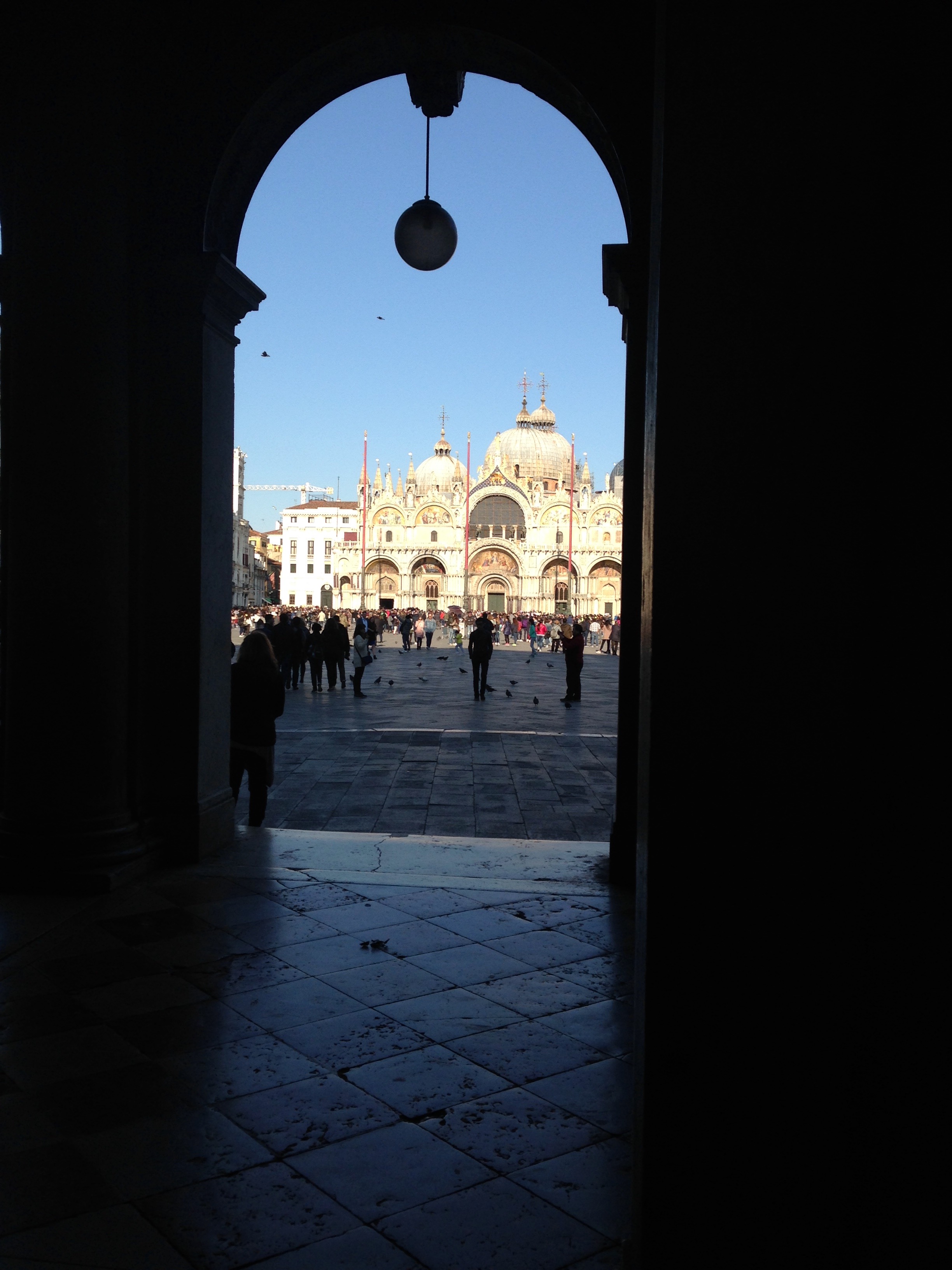
FullSizeRender (2)
The approach to St. Mark’s Square and Basilica

We enjoyed winding through Venice’s maze of streets (actually walkways) and crossing its bridges to see cathedrals and numerous campi, those open squares that at one time served as city centers of the assorted islands that compose Venice. We visited the grocery store daily, shopped the pharmacy for an Ibuprofen equivalent, accompanied my daughter to get her hair cut and styled, ventured out at 5:45 a.m. for the train station, bought Clementine oranges at the Rialto Bridge markets, and shopped for Command strips that were never found.

If we had been able to stay a week longer, I would have sought out a library, found the local university, and asked someone what happens if one has a heart attack or other medical emergency. (Seriously, what’s the procedure in a city without cars, motorcycles, or even bicycles?)

So when I found The Politics of Washing on the kitchen table after my daughter had returned home, I grabbed it and read it in just a few sittings to learn about how native residents live in this “movie set” city.

Besides satisfying that curiosity, the book offers glimpses of Venice’s history as a wealthy trading link between East and West that reached its height in the late 1200s. It also recounts the city’s survival in the 1630s of the Black Death that’s still celebrated with an annual pilgrimage to the iconic and beautiful Santa Maria Della Salute.

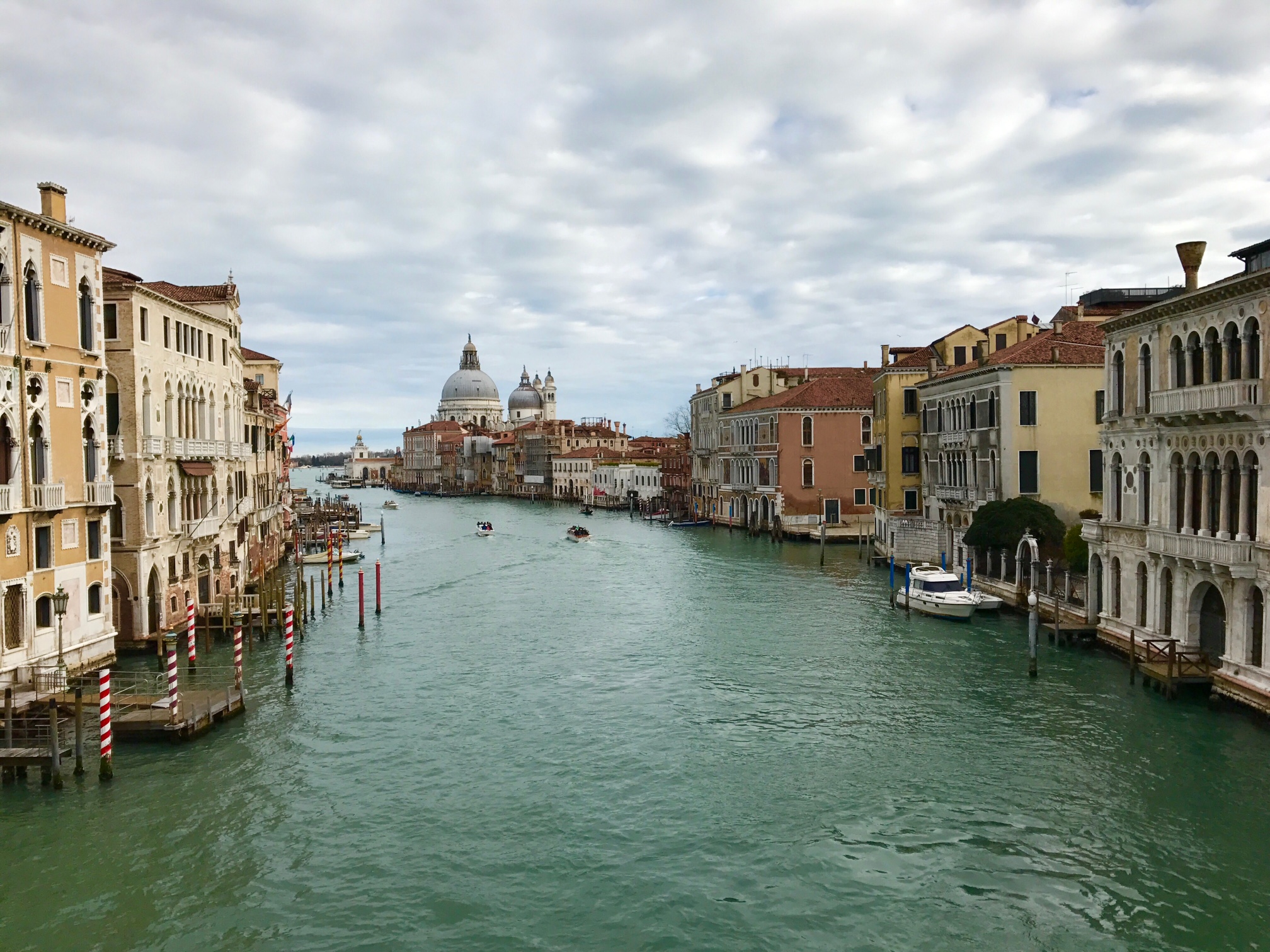
IMG_4255 (2)
At end of the Grand Canal stands Santa Maria Della Salute. Photo: Katherine Yung

Coles balances this history by showing readers Venice’s contemporary citizenry and its “groups and committees promoting local events and activities. There are youth groups, community groups, dance companies, theatre companies, choirs, rowing clubs. There are associations working for residents to change policy on housing, transport, the environment. Events that come from outside are also, of course, part of the real life of the city. The rich influx of the arts is enthusiastically embraced by many of the people who live here; the Biennale exhibitions, visiting speakers, concerts, opera and theatre are all part of the lives of Venetians.”

Coles continues, “But the difference between Venice and any other city, the reason why there is so much sensitivity and debate about what is and is not Venetian, lies in the uniquely critical problem of numbers. The citizens of Venice are so vastly outnumbered by the visitors to Venice that there is no balanced relationship between the city and the world at large. There is no equal exchange in which the city offers up her history, and her beauty in return for the cultural riches brought in from the outside world. Not surprisingly, this leads to a deeply ambivalent, not to say confused, reaction to outsiders.” This is the delight and the quandary that Coles reveals in this captivating tale of her temporary life in Venice.

As rushed tourists ease away from the magical city on their mammoth cruise ships, I hope that they will have spent at least enough time there to cause them to wonder, What’s it like to actually live in Venice? When those tourists read The Politics of Washing, they’ll learn just that, as well as gain an appreciation of the benefits and costs of tourism to this ancient, sparkling city on the Adriatic Sea.

Featured Photo by Felipe Salgado on Unsplash

Categories
Italy (Venice) Poetry

10 More Things You’ll Find in Venice in March: A List Poem

I spent a week in Venice a few months ago and tried to notice details— large and small.

  1. Young mothers in Campo San Stefano at five in the afternoon, visiting and watching their little girls jumping rope.
  2. Intricate wrought iron street lamps at Palazzo Grassi.
  3. Post-Carnivale confetti clustered in the recesses of steps on the bridges in San Marco.
  4. A thirty-something sandwich shop worker laughing as he slices meats for the lunch crowd in Campo San Vio.
  5. AC/DC’s “Back in Black” playing on the intercom at the Punto Simply grocery.
  6. A seagull resting on a terra cotta rooftop at T Fondaco dei Tedeschi.
  7. A woman jogging in tank and tights along the Zattere waterfront before dawn on a Tuesday.
  8. Prayer candles burning in red votives inside Santa Maria della Salute.
  9. The murmur of gondoliers conversing on a Saturday night outside the Rialto COOP grocery.
  10. Sensible, durable, unadorned shoes and boots; not a high-heel in sight.
Venice
Credit: W. Mitch Yung

To read about more things you’ll find in Venice in March, click here.

Featured Photo by Eric Barrett on Unsplash

Categories
Italy (Venice) Poetry

10 Things You’ll Find in Venice in March: A List Poem

  1. An unlit candle in a bowl on a round table outside a glowing café.
  2. A lone fuschia glove dropped on the steps of a bridge in Campo Sant’Angelo.
  3. A woman sweeping her windowsill with a handheld broom.
  4. A cocoa-brown poodle posing happily for its owner’s camera.
  5. A row of uncomfortable, wood-and-metal chairs lined up behind the pews in St. Zaccaria church.
  6. The staccato shouts of middle school students playing out-of-doors, just beyond a brick wall you cannot see behind.
  7. A woman begging for alms, kneeling, head down, enveloped in black, silent, holding a withered paper cup in her hand.
  8. Orange, lavender and smoky-gray marzipan fish glistening in a store full of sweets.
  9. A troop of ten-year-olds skateboarding in Campo Santa Margherita at nine o’clock on a Saturday night.
  10. An overturned green plastic flower box waiting for spring.
Photo: Marilyn Yung

Thanks for dropping by! I’ll be visiting Venice again in May. Look for more details in my future posts!

Featured Photo by Semyon Borisov on Unsplash