A few days ago, I posted on Instagram about how one of the perks of being married to an artist is that you can tag along with them when they serve an artist residency in Greece.
Well, if you need another reason to marry an artist, here it is:
You have a built-in tour guide for all things artistic: museums, historical sights, and exhibitions.
Today, I fully realized the benefits of being married to an artist while walking the grounds of Mycenae. Not having studied these incredible ruins for a degree in journalism and teaching, I really didn’t understand much of what I was seeing.
However, walking around with my husband, I gained a glimmer of understanding about the culture that preceded classical Greece and influenced western art, architecture, and philosophy.
Mitch was able to tell me that: the Lion Gate that leads to the Citadel at Mycenae is important because it shows a monumental post and lintel entry point. Another reason: those lions throughout history never became buried or destroyed. Always visible down through the ages, they created a landmark for historical study that continues in current times.
A closer shot of the Lion Gate.
The Lion Gate structure, like all of Mycenae, was built from 1600-1300 BC. When you wrap your head around that date, these ancient ruins— some of them today merely stubs of stone outcroppings and faint traces of walls and foundations–are indeed spectacular.
Many times today, I found myself asking things like:
“How in the world were they able to hoist that huge stone all the way up there?”
“And why did they need that large of a stone in the first place?”
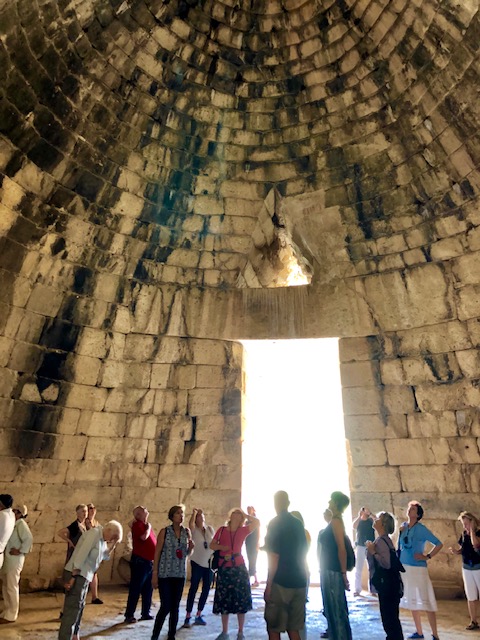
My husband Mitch is also able to tell me about the triangular openings above many entries. These triangular openings displaced the weight from above so the weight didn’t rest directly on the lintel. We saw several of these triangular openings on beehive-shaped tombs. Imagine how many failures were experienced over the years in order for the Mycenaens to learn and then apply this engineering principle in the surviving structures we admire today.
That’s one BIG stone above the doorway. See how it curves?
See how that curved stone is actually bigger than it looks? You walk under it a good bit when you enter the tomb.
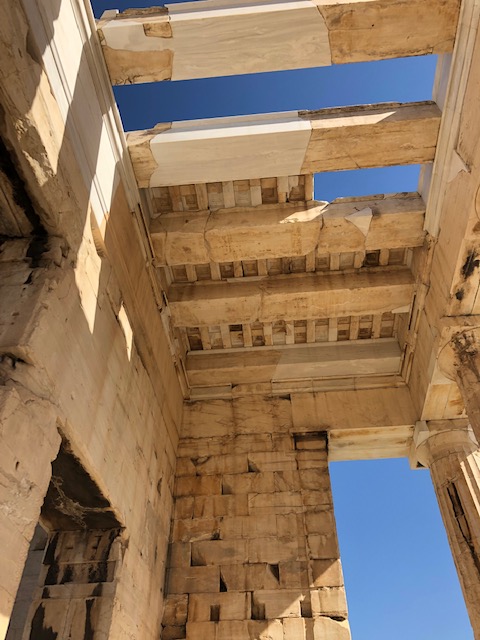
Another example of my husband’s knowledge that comes in handy when you go to places like Greece: Back in Athens, inside the Propylaea, the entrance to the Acropolis, one could easily walk under the ornate “ceiling,” never pausing to consider the enormous stones above.
In the next photo of the Propylaea in Athens, see the large horizontal pieces, some of which have new and whiter marble replacement pieces? Now see those stones in between those horizontal pieces? Those are separate stones placed over the horizontal beams. Stone on stone on stone. Truly incredible.
Ceiling of the Propylea at the Acropolis in Athens a few weeks ago.
But let’s return to today’s Mycenae visit.
Here’s I am again walking under a lintel that spans the posts, transferring the weight to the posts. Maybe this is common knowledge to you, but it’s new to me and fun to hear about from my husband.
Post and lintel doorway at the Citadel
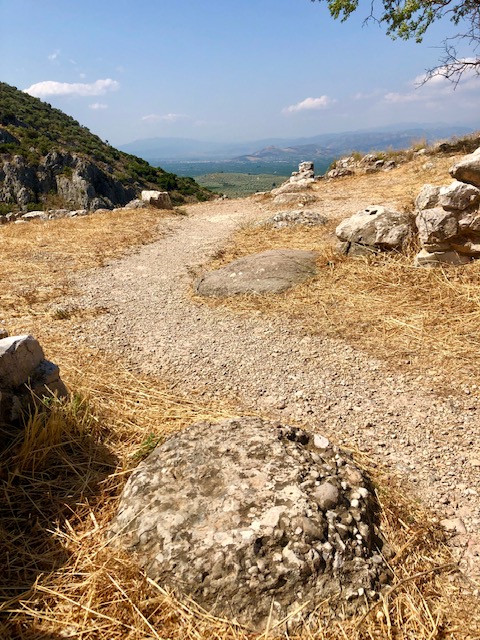
Another spot I saw today: the House of Columns at the Citadel at Mycenae. Notice the large stone in the front of the picture? Now see how there are four more behind it spaced regularly? Those used to be columns. Amazing.
The House of Columns at Mycenae
Quick summary of the importance of Mycenae
We walked the mile or so up the road to Mycenae from our AirBnB. It was a breezy, sunny day and warm, but not too warm. It was actually a nice walk full of oleander and olive trees.
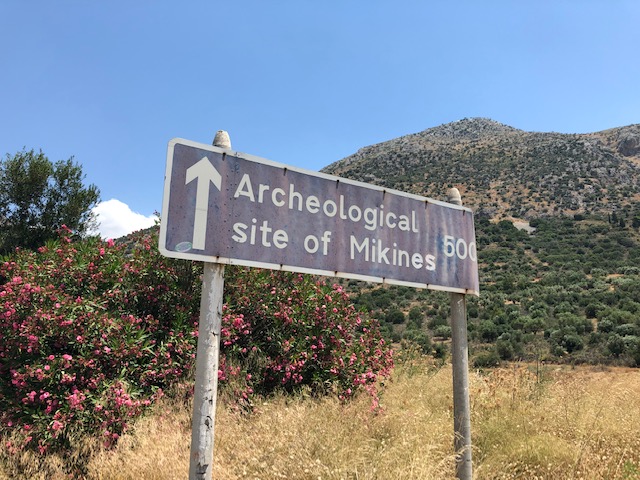
We started out here at our AirBnb. Yesterday was a long day. We arrived here last night after leaving Skopelos, ferrying to Skiathos, flying to Athens, and taking a bus to Fichti, where our host met us at the bus stop before driving us to Mycenae (spelled Mikines in Greece using English alphabet).
Our AirBnb in Mycenae
Tomorrow, we head to Delphi, where Mitch will get to play tour guide again. What a perk for me!
Thanks for reading! Catch tomorrow’s post by following my blog. Ever been to the Peloponnese? Leave a comment about your experience.
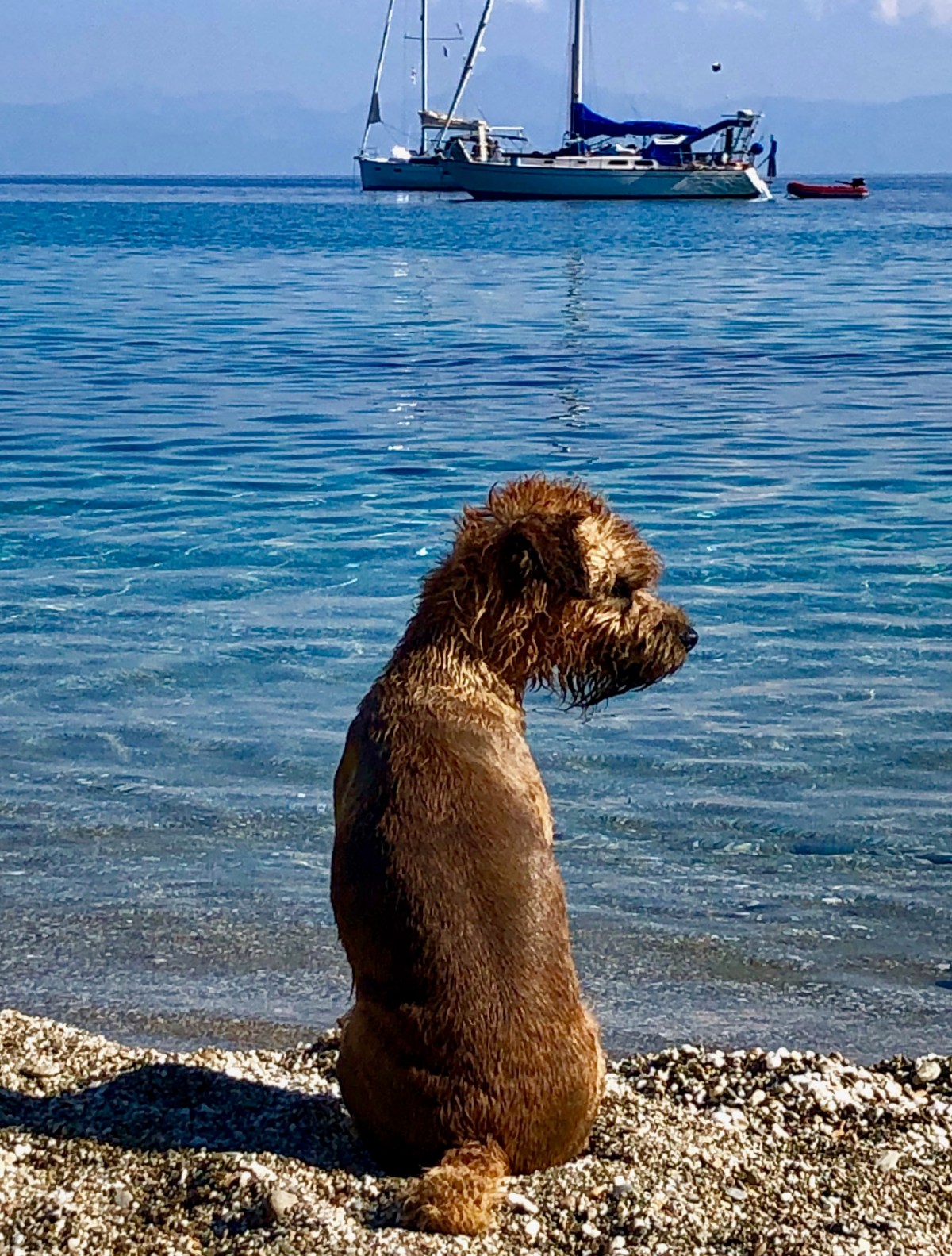
…Stafilos had a dog, so that pushed it ahead of the pack
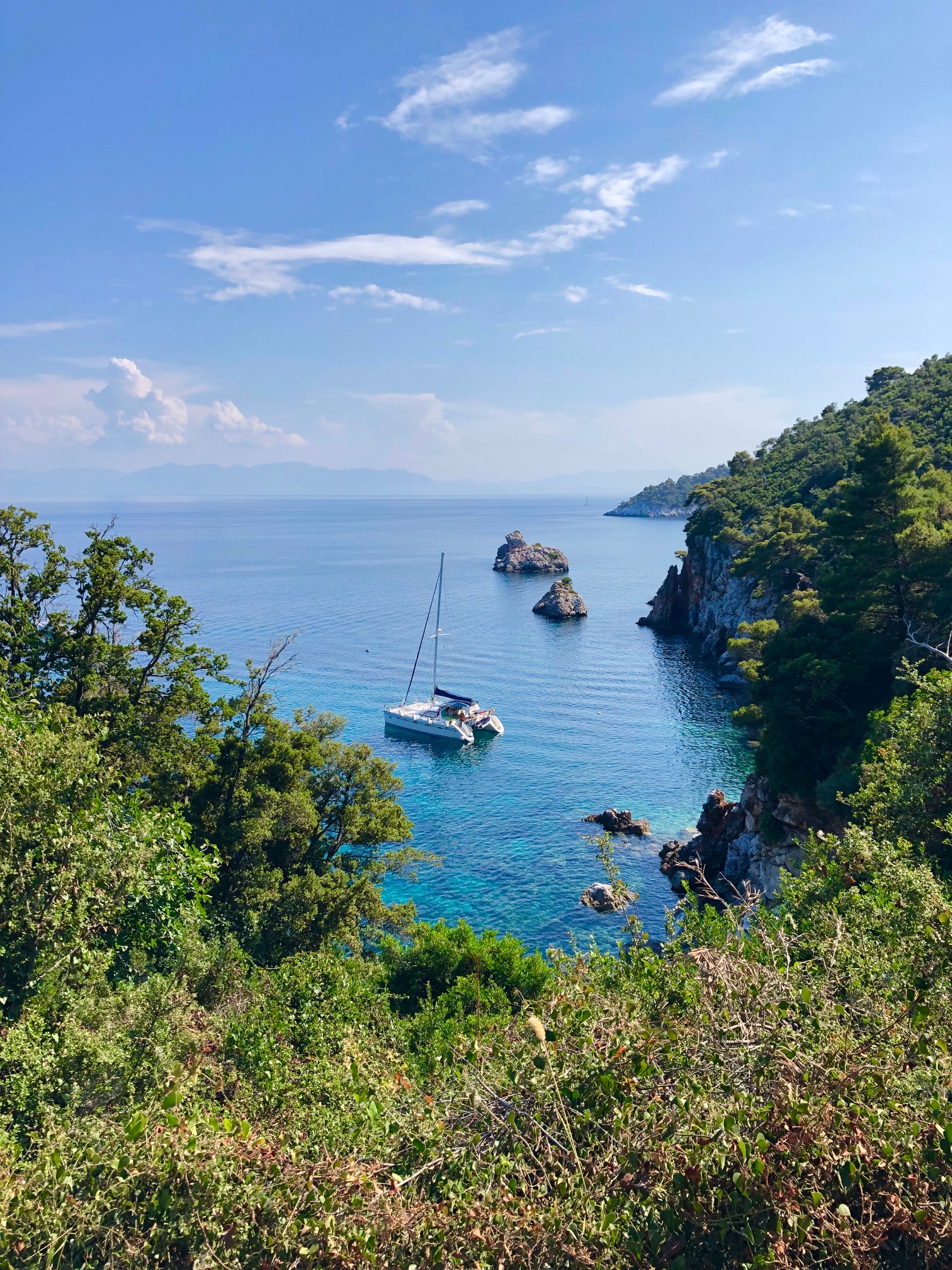
We visited four beaches (Glisteri, Glifoneri, Panormos, and Stafilos) during our three weeks on Skopelos Island and they each were clean, comfortable, and drop-dead gorgeous.
However, Stafilos Beach had a dog, so Stafilos for the win.
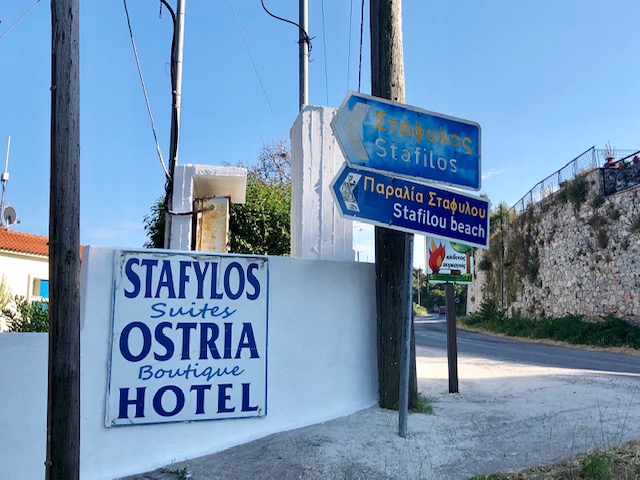
Follow the signs down the hill after you exit the bus.
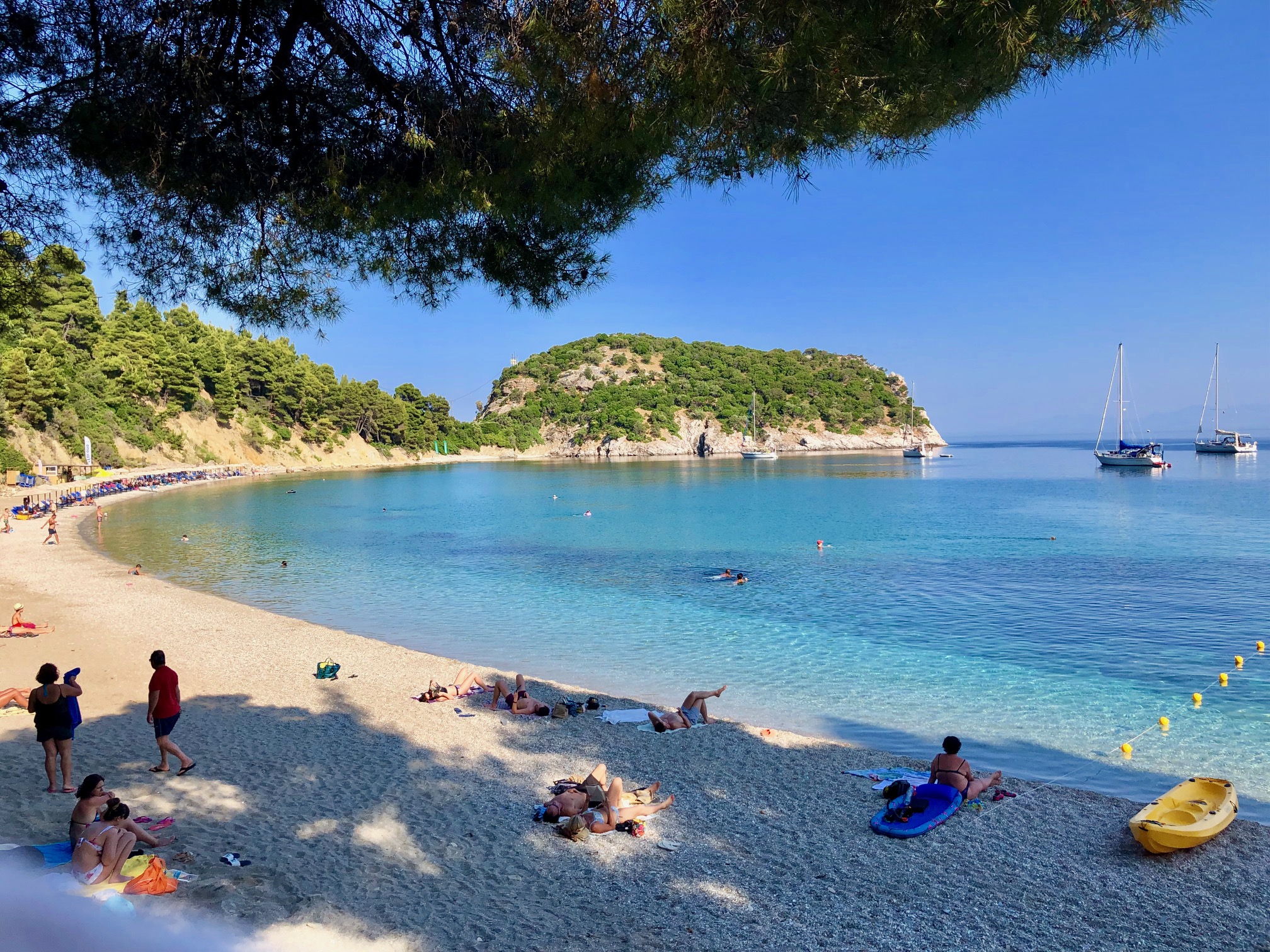
The beach is big and beautiful.
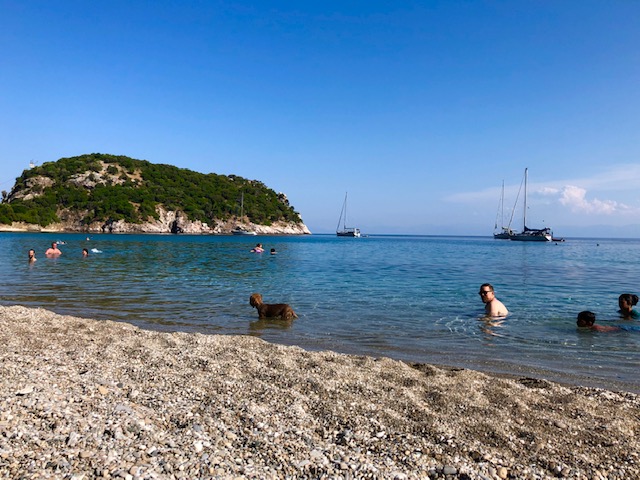
When we visited Stafilos last Friday afternoon, a brown, wiry-haired dog made its rounds to the various beach-goers settled on towels and blankets. It greeted each visitor it met and then flopped down, soaking wet, and wriggled in the tiny pebbles. It was truly this dog’s dream come true, apparently.
The dog cooling off in the water.
Never one to ignore an animal, Mitch and the little dog became fast friends. The dog sat with us on our towel and surveyed the kids and adults sunning, swimming, and snorkeling around us. And then she returned to the water and swam out to her owner anchored out in the cove. With her head just a tiny brown dot on the surface of the water, she amazed us by soon returning to the beach for another dose of interaction with strangers.
Mitch and man’s best friend
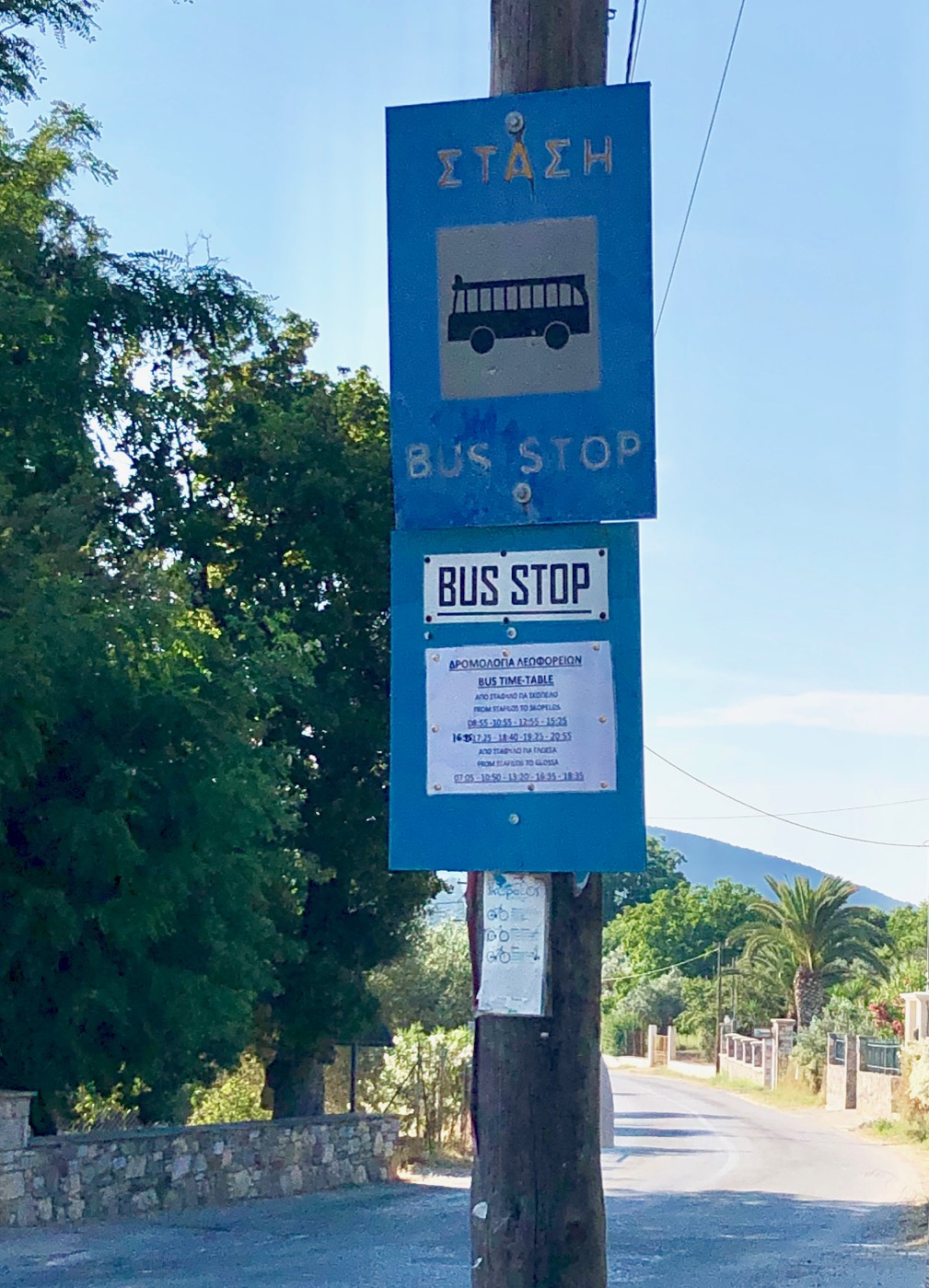
Stafilos is just a ten-minute bus ride from downtown Skopelos. Check the bus schedule board at the bus kiosk, arrive at the designated time, board and pay your 1.60€ when the attendant comes to you during the ride.
We headed out in the late afternoon and returned about two hours later.
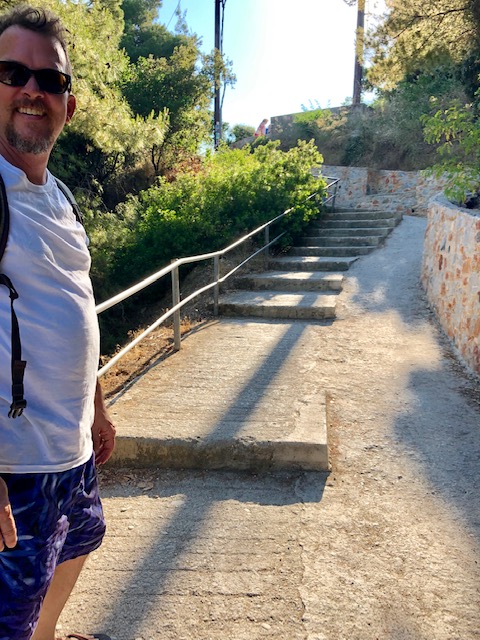
Make sure you wear good shoes when you go, since you’ll have to walk about 500 yards or so downhill.
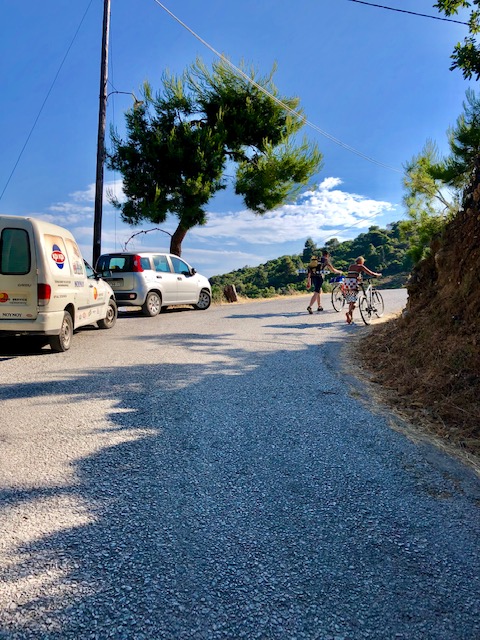
The road down to Stafilos Beach looks like this…
The walk is steep, so watch your step. However, pause to catch the gorgeous views.
…and this…
and this.
Once you arrive at the beach, you can just spread out a blanket or towel at no charge or 2) pay 7€ for a beach umbrella and two wooden chaise lounges. You can see the umbrella section at the far left edge of the second photo in this story.
When it’s time to go, don’t forget you’ll have a hike back up the hill.
The road back up the hill from Stafilos Beach looks like this…
…and this.
There are a couple of tavernas you can visit on your walk up. These are casual cafes that serve fresh seafood, salads, and drinks.
You may see some tiny churches on the hillside…
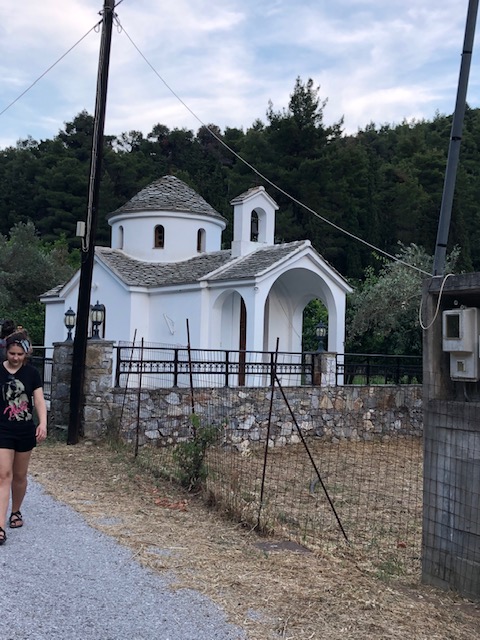
As you walk up, look around at the hillsides to see the occasional private Greek Orthodox churches. Here’s another one across from the bus stop:
…or at the bus stop.
Also near the bus stop: chickens pecking underneath an olive tree. What a great scene!
Chickens feeding beneath an olive tree.
We stood across the street in the shade and waited near this sign for the bus. It was right on time!
And finally… the bus stop.
Thanks for reading again today! We are en route to Mycenae today via Athens. In fact, I’m writing this post in the Skiathos Alexander Papadiamantis Airport. Click like, leave a comment or follow my blog for more stories on the daily.
When we booked our return ferry tickets from Skiathos to Skopelos last week, the woman at the ticket office confirmed our booking by asking, “There’s a Flying Dolphin you could take. Would a Flying Dolphin be okay?”
That’s strange, I thought. Of course, a Flying Dolphin would be fine, I wanted to say. After all, we just need to get from Skiathos to Skopelos, and why not get there as quickly as possible?
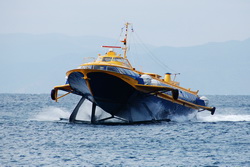
But then the next morning, bags in hand, standing at the Skiathos port, we saw the Flying Dolphin pull in. Or should I say float in. Or ski in. Or jostle in. From a distance, this vessel flew fast above the water. We could actually see daylight between the bottom of the hull and the surface of the water. Yes, the name “Flying Dolphin” described this vessel perfectly.
The Flying Dolphin is a hydrofoil passenger ferry operated by Aegean Flying Dolphins in Piraeus, Greece, a port city near Athens. According to the company’s website, it “offers daily service with two modern high speed flying dolphins from the port of Piraeus to Aegina and from the port of Volos (Thessaly region) to the islands of Skiathos, Skopelos and Alonissos all year.”
Because of its speed, taking a Flying Dolphin will be a bumpier ride. (Ahhh… that’s why the ticket clerk made sure we knew what we were getting ourselves into.)
In addition, a Flying Dolphin will cost more than a traditional ferry, such as ANES Ferries’ Proteus or Blue Star Ferries’ Flying Cat. (But then again, like us, you may not have a choice: only one morning ferry left for Skopelos on our travel day.)
A more traditional passenger ferry, ANES Ferries’ Proteus
Don’t expect a lot on the inside of a Flying Dolphin (and there’s no sitting outside either, by the way). Yes, it’s perfectly clean and adequate, but doesn’t have the top-rate feel of other ferries… no coffee shop, no lounge seating at tables. No flat screen TVs or fancy lighting.
Fairly basic seating. Nothing fancy. A tray table if you need it. Seating includes a large center section of rows and and a single column of double seating along each side.
However, what the Flying Dolphin lacks on the interior,
it makes up for with one thing: speed.
Once the Dolphin reaches full speed, it coasts across the surface of the water, skimming along on fin-like hydrofoils that lift the hull out of the water.
And with that speed, expect a bumpy ride… especially if there are higher than average winds on the water.
We saw the “flight” attendant, who also took our tickets as we boarded, deliver two paper bags to seasick riders about halfway through our fifty-minute ride, which made a stop in Glossa (another town on Skopelos) on our way to Skopelos Town.
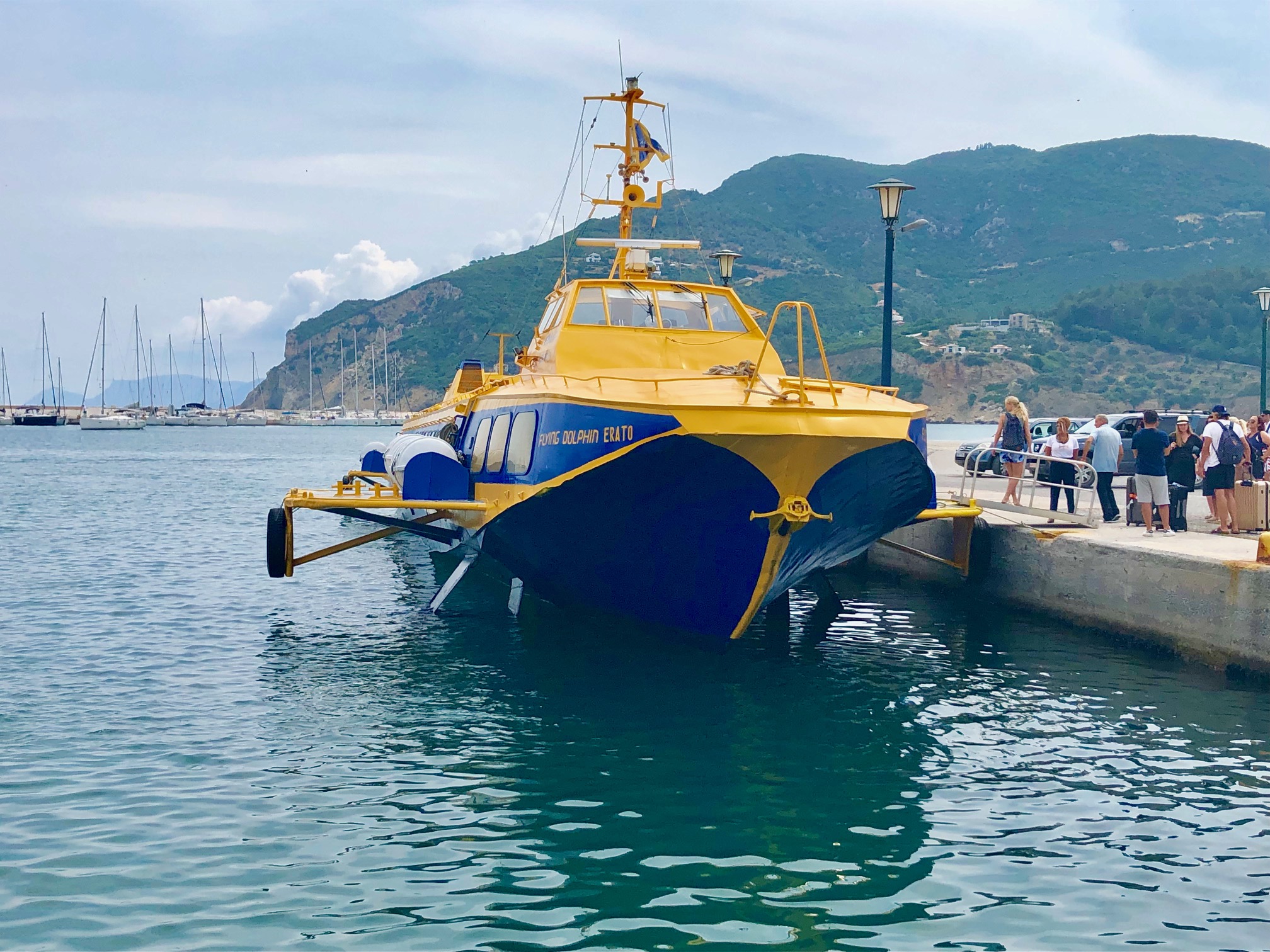
Notice the hydrofoils that become the “wings” of the Flying Dolphin, allowing it to go faster than other vessels. The tires provide a cushion for the vessel when it meets up to dockside.
The water splashes continually onto the windows of the Flying Dolphin as you ride.
At one point, a turn in the water and an especially strong gust of wind caused our boat to tilt right, surprising several riders on board. A few passengers called out with a holler when that happened.
This photo shows the hydrofoils more clearly.
The crew attaches a walkway to the Flying Dolphin as passengers wait to board.
We leave Skopelos Island tomorrow morning and are taking a ferry to the island of Skiathos where we will fly to Athens. There are winds forecast for the morning as a cold front is coming in. Passengers taking a Flying Dolphin should take warning (or even prepare for a cancellation, we’ve been told).
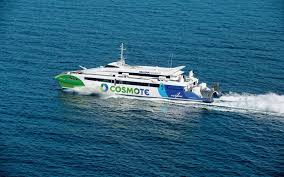
The Flying Cat, a catamaran.
Luckily, we’re not one of them. We’ll be taking Blue Star Ferries’ Flying Cat, a catamaran ferry, instead.
Thanks for reading! I’ve been really surprised by the variety of ferries— and watercraft in general— on our Greek tour. Feel free to click “like,” leave a comment or follow my blog for more.
It just wasn’t as elaborate as I thought it would be, I thought as I surveyed the interior of Venice’s Basilica dei Santi Giovanni e Paolo. Yes, it was beautiful, just not as beautiful as I expected for a “Top 10” ranking in the little book about Venice I had at home.
A sign at the door had notified us of a 3.50€ entrance fee to enter. My daughter and I both agreed that this view from the doorway would suffice. After all, we had been in many other Venetian cathedrals or basilicas.
However, I liked the idea of at least a souvenir from Basilica dei Santi Giovanni e Paolo. The rotating stand at the edge of the entry steps might have one I could purchase. I spun the stand, picked out a couple of cards and stepped over to an ornate kiosk. From the back, a man entered the darkened kiosk.
He had just finished setting up for the day—repositioning the “No Photos” sign, stacking up the 1€ kimonos available for purchase by bare-shouldered women, arranging a selection of votive candles.
I slid the two postcards under the slot in the kiosk’s Plexiglass shield. The man looked intently at each one and then met my eyes.
“Did you see the originals?” he asked.
“No.” How could I explain in my non-existent Italian that we had already seen so many churches in this great city? He straightened the cards in his palms with a tap on the marble counter.
“Okay, you must see the originals.” He stepped out from the kiosk and stepped around to meet us. Grabbing the velvet partition rope, he said, “Come with me.”
He handed me the postcards, and we followed him into the cool darkness of the basilica. He strode purposefully to a mammoth collection of oil paintings on the large wall to the right.
As he walked, he spoke over his shoulder, “It’s a crime to come to Venice and buy a postcard and not see the original because you don’t want to pay three-fifty Euro.”
Ouch, I thought.
Here was a Venice enthusiast if I had ever met one. Flashing his dark eyes from beneath even darker curls, he continued: “I will show you the two paintings on your cards.” He stepped over to the wall behind the oil paintings and tapped a small plastic rectangle. Click. Light saturated the paintings.
My daughter reached for my postcards for a closer look. “This is a Bellini—those are why this church is on the list. These are special,” she whispered.
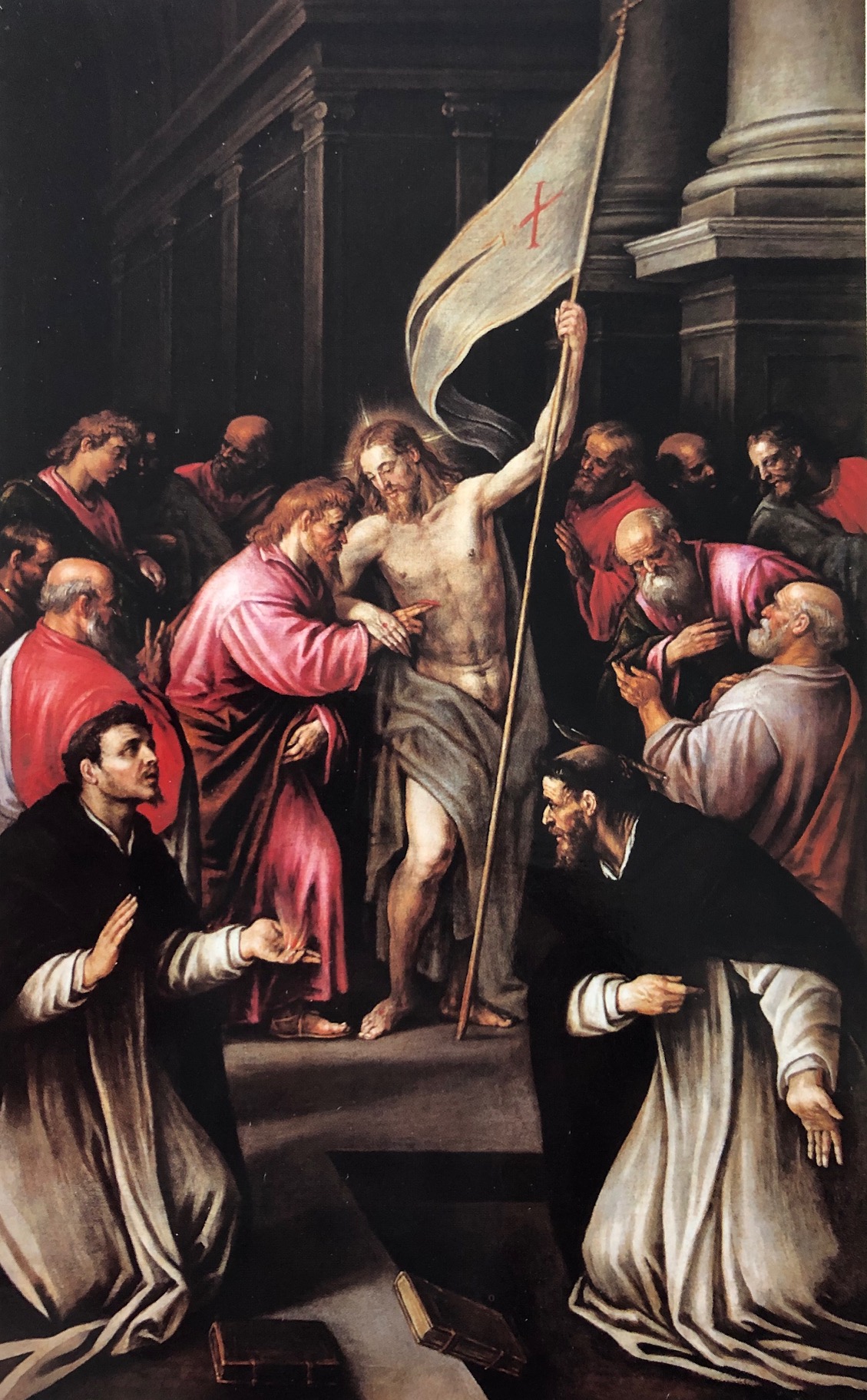
“Here is the Bellini,” he called from the light switch.”You look at this one, then go over to that one”—he pointed further into the nave directing our eyes to the darker painting of Christ with the apostle Thomas by Leandro da Bassano— “and then come back and see this one again. You turn on the light if you need to.”
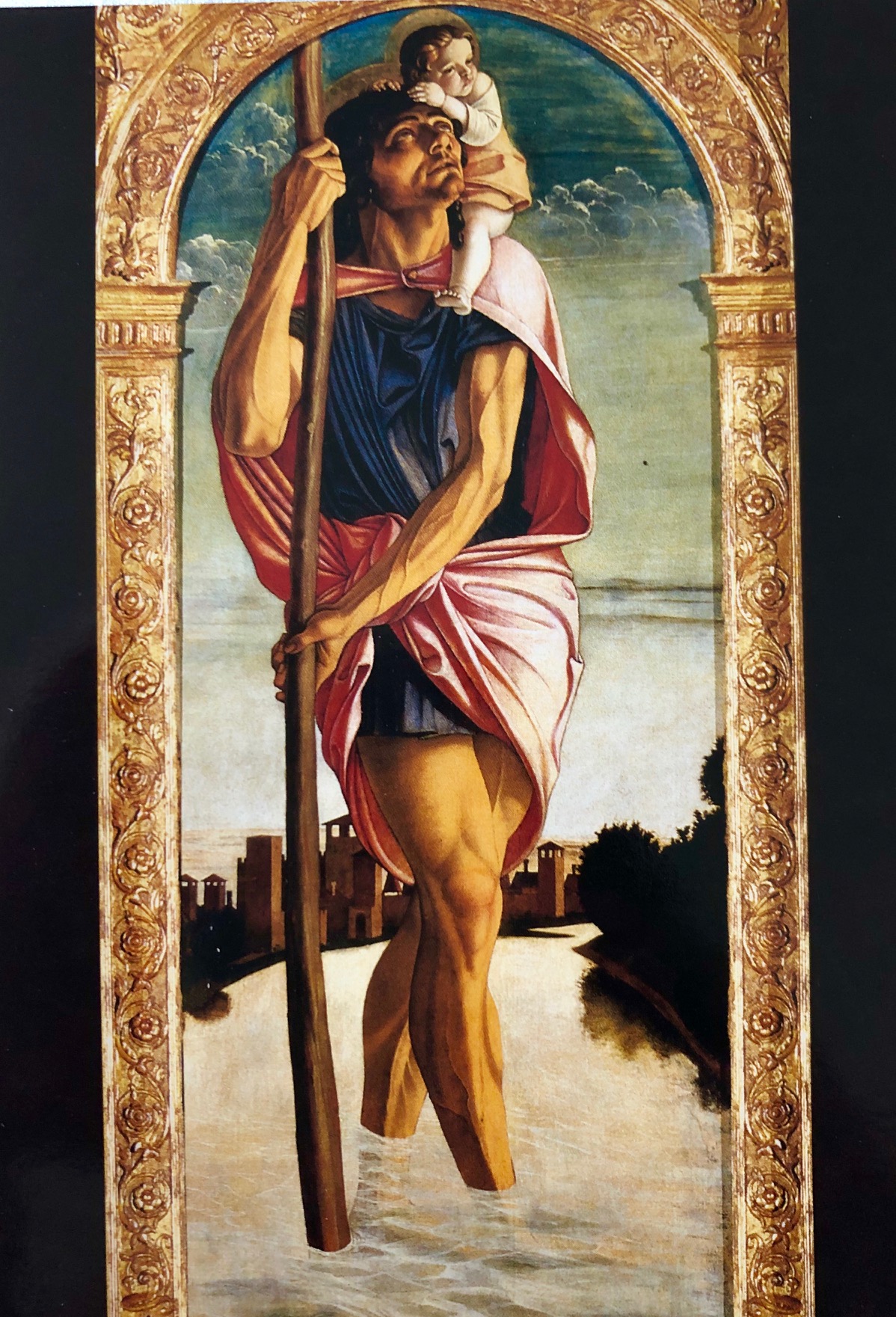
I’m not an art historian, but a little online research revealed these paintings were not made with oils, but tempera paint on wooden panels. This particular one shows the Christ child being carried by Saint Christopher, a 3rd-century church martyr executed by the Roman emperor at the time. The painting glowed under the light, and reminded me of another glowing Bellini at the Basilica dei Frari. It seems Bellini knew the tempera medium well.
We walked to the other painting we had been permitted to see at no charge.
L’incredulita di S. Tommasso by Leandro da Bassano | Notice the books falling to the ground along the lower edge… to show the surprise of the onlookers when they realized that they were in the presence of the resurrected Jesus Christ.
This second painting, L’incredulita di S. Tommasso by Leandro da Bassano was near the front of the church. It was dark and partially obscured by a screen of sorts. It shows Christ showing the doubtful Thomas his crucifixion wounds, proving the resurrection. I later learned that Leandro da Bassano was a famous painter who followed in his artist father’s footsteps and was later knighted by the Doge of Venice. Many of his works are confused with Tintoretto’s and are difficult to date.
We returned to the Bellini and switched on the lights one more time.
“Oh, thank you,” said a tourist staring at the painting who had entered after us.
We decided our visit was over. As we left, my daughter selected another postcard and paid. She offered the guard 5€ to thank him for allowing us in.
“No, no, you keep,” he said. “I just want to show you what you want to see. A postcard isn’t good enough. It’s how I make you… what to say… better tourists,” he said, smiling and shrugging his shoulders. I could tell he meant no offense by his remark.
He continued. “You know… when you’re inside a church here, tell the guard that you want to light a candle and say a prayer and they will let you in.”
Did I hear him correctly? I asked myself.
Still, I’m not Catholic, and using prayer as my ticket inside a church seems disingenuous. However, I did appreciate his candid tip and his enthusiasm for La Serenissima, the traditional name for the Venetian Republic.
We left the church and entered the campo, the large square outside. I knew I wouldn’t forget this brief encounter in a city coming to grips with the effects of mass tourism. Two weeks before, according to the blog La Venessiana, tugboats had allowed an out-of-control cruise ship to strike an occupied river cruise boat instead of Santa Maria della Salute. To compensate for the wear and tear that throngs of summer tourists wreak upon the city, officials are devising new tourism taxes.
In reflection, the guard at Basilica dei Santi Giovanni e Paolo was merely doing his part… politely doing what he could to help visitors he met to “be better tourists” in his city on the sea.
Thanks for reading! I really enjoyed meeting this guard and hearing his frank ideas and suggestions. It’s easy to tour Venice and not exchange words with a local. Please feel free to click like, leave a comment, and follow my blog for more stories from Venice and Greece.
I’m betting that the question, “Wonder where the hospital is around here?” passes through the minds of most visitors to Venice… at least those visitors who stay on the island and think about where they would go if they twisted an ankle or suffered whiplash doing a double-take at an especially handsome gondolier.
Last Sunday, my daughter and I wound up at the hospital without really meaning to. We intended to go see the church, Basilica dei Santi Giovanni e Paolo (the Basilica of St. John and Paul). In 2017, I had purchased a little folding picture book of the top ten Venice sights and this church was on that list.
During the week that we visited back then, we simply didn’t get everything accomplished. Back home after our trip, I realized that if I was ever to return to Venice, this church would be on my list of sights to see.
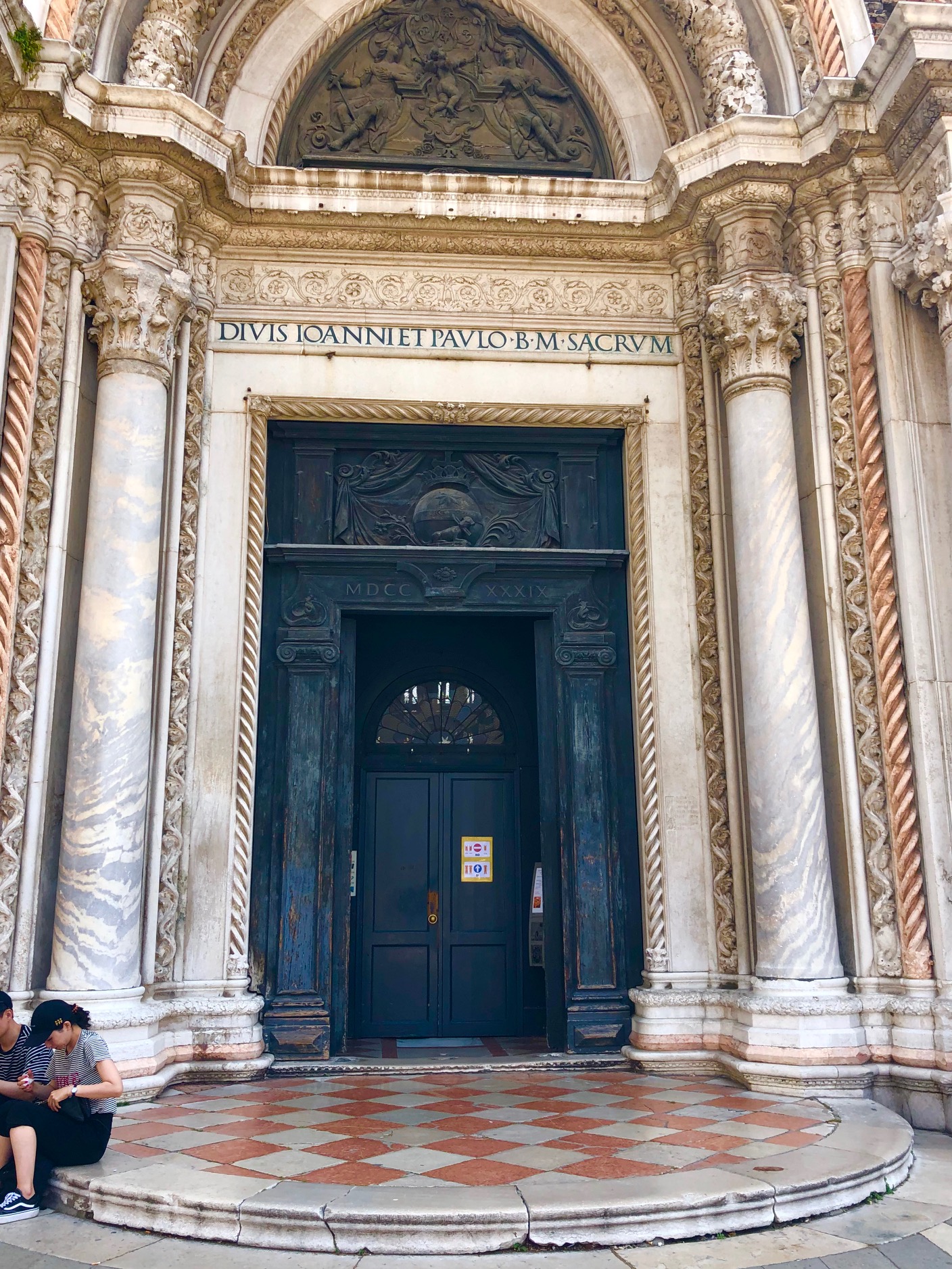
And when one sees this church, one also has the opportunity to see the Venice hospital, the Ospedale SS Giovanni E Paolo Venice. That’s because the church is literally connected to the hospital building. You can enter the hospital from either the black front doors (as seen in the photo above) or you can enter from the backside, which borders the waters of the lagoon.
My daughter and I decided to take the water route around the back of the island. My daughter had never actually ventured on the vaporetto route past her Santa Elena stop, so this was a first-time experience for her, too.
Here’s the sign in the vaporetto bus stop that shows the stop for the Ospedale (Italian for hospital). Note the international symbol for hospital, “H,” below the line.
Signs like these are posted inside the vaporetto bus stops.My daughter has become especially adept at navigating around Venice on water buses, known as vaporetti.
We traveled around the backside of the island to eventually arrive at the church; we didn’t realize it at the time, but the church is joined to the hospital.
This map is courtesy of The Venice Insider. The “3” in the picture above marks the hospital’s location. Santa Elena is included in the area inside the green oval.
Here are some more pictures from the vaporetto ride around to the hospital and the basilica.
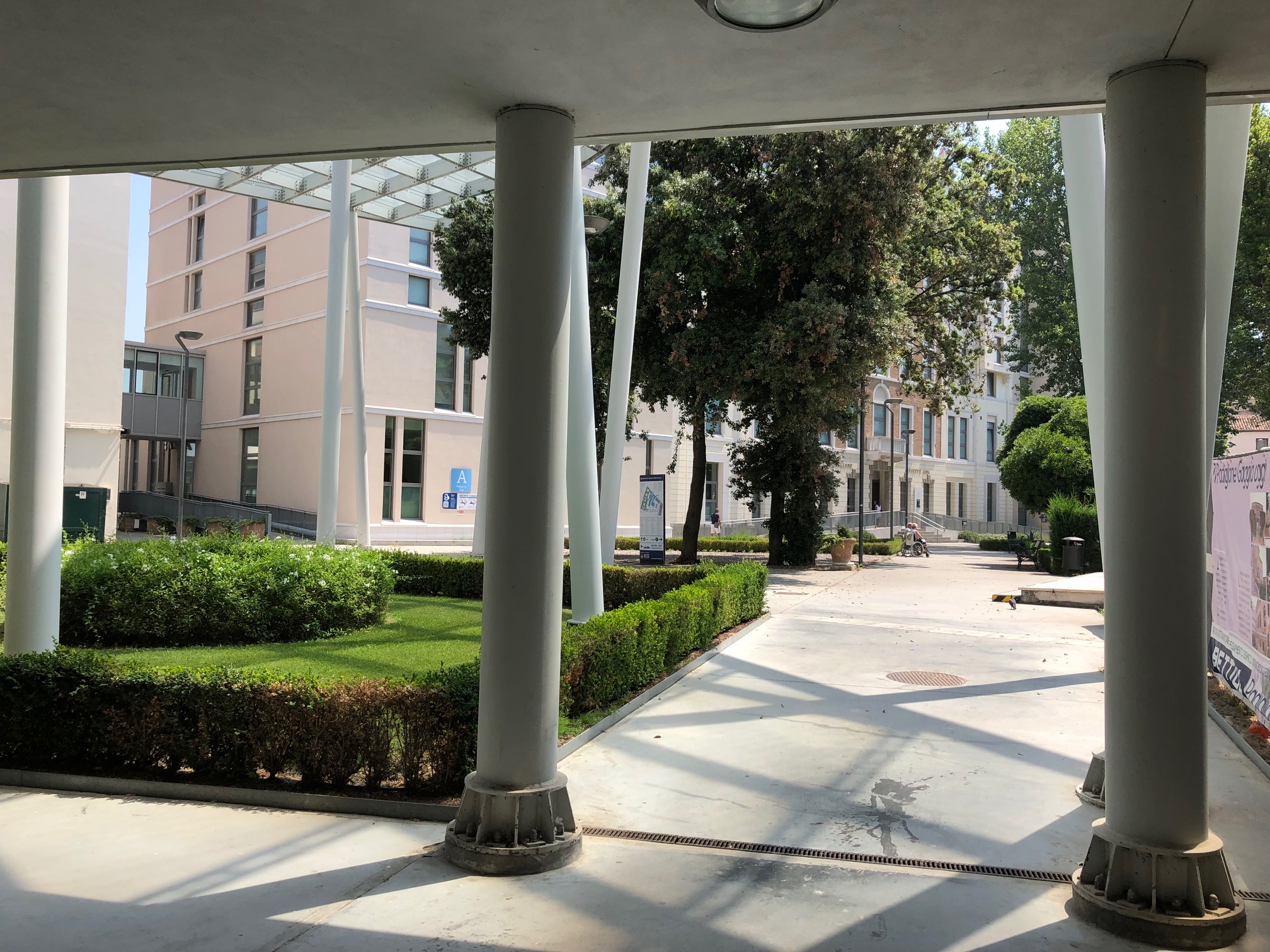
According to The Venice Insider, the hospital grounds are not open for tourists. That being the case, I hesitated to take lots of pictures. However, I did snap a few. Here’s a picture of a modern-looking inner garden area you’ll walk through after leaving the vaporetto and walking through the first doors you come to.
I took this picture after walking through this inner courtyard.
Katherine’s roommate had told us to look for the gardens with all the cats. We thought that this was the garden she meant. We were wrong, as you will soon see.
Before we would find the garden full of cats, we walked by the Emergency Room doors. Here it is, for all you ankle twisters or gondolier gawkers:
The E.R.
Keep walking past the ER and you will eventually arrive at a beautiful garden, surrounded by loggia walkways and filled with about a dozen stray cats.
Residents and visitors alike care for Venice’s many feral felines. The kitties are quite comfortable during the warmer months. I’ve read that the cat population can become a problem during cooler temperatures and that there are volunteer groups that help with the problem.
Notice the black and white cat sleeping under the flower pot in the center of the photo. Photo: Katherine Yung
Photo: Katherine Yung
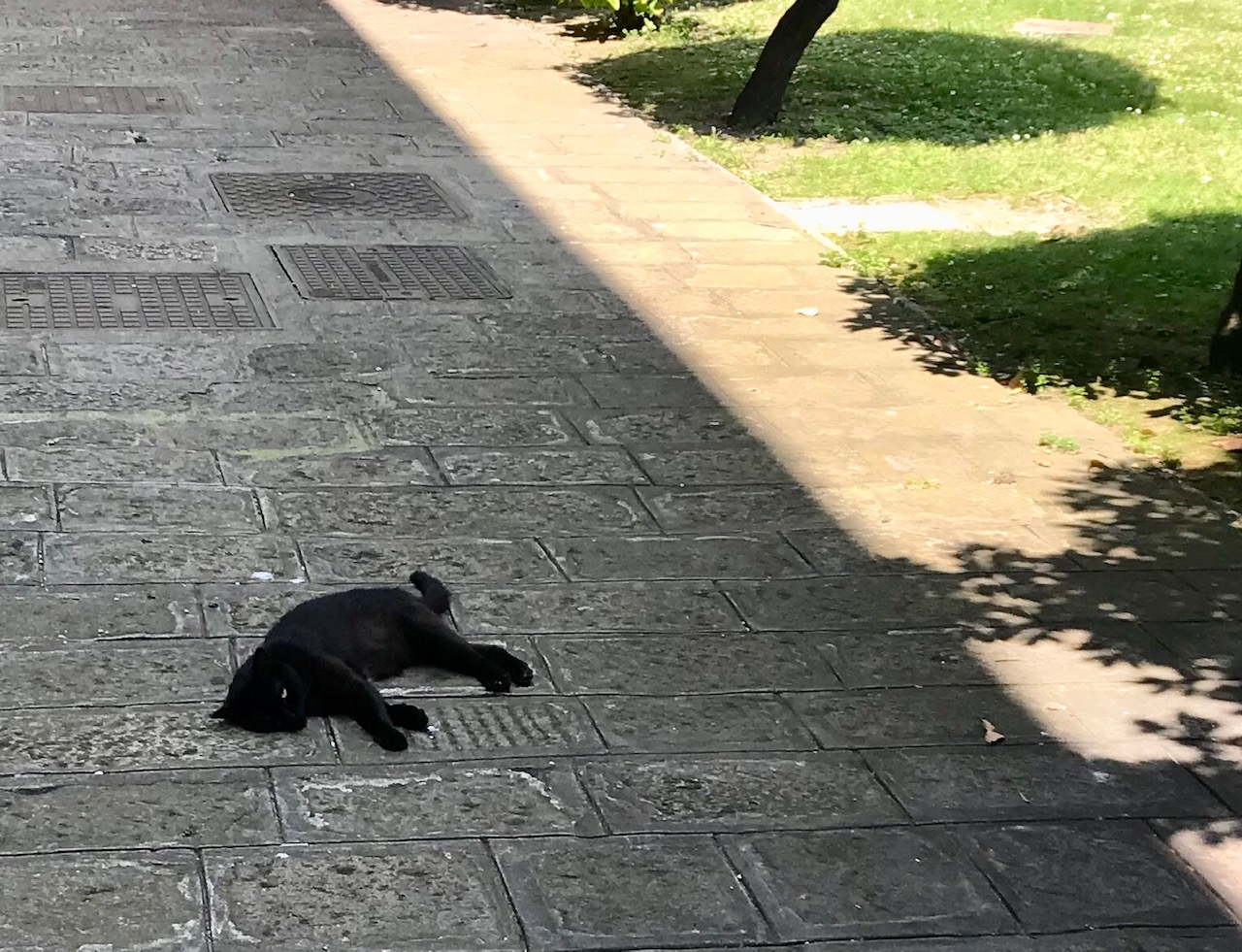
This cat is so relaxed we thought he was sick, or worse. No, just very content. Photo: Katherine Yung
After you exit the cat garden, you’ll pass through an exit where you can continue on to the wards of the hospital or turn left to the Scuole Grande, which leads eventually leads outside to the campo with Basilica dei Santi Giovanni e Paolo.
If you continue down these steps, you will enter this grand entrance hall. There are doors and hallways that lead from this hall. This is the Scuole Grande (see caption above). At the end of this hall, is the front door of the hospital shown in the elaborate facade in the first picture of this article.
Entrance hall just inside the front facade entrance to the hospital. The cat garden and ER are at the far end of this hallway. Most people needing ER services would, I imagine, enter from the backside along the main waterway.
And this brings us to the front entrance of the hospital on the campo, the large square that is the “city center” of this area of Castello.
In effect, this post has brought you to the hospital from the backside along the water, to the very front door, which is shown in this photo at the far left (see the oval-topped dark door that blends in with the light post).
And this also brings us to the close of this post. I will continue this post tomorrow with our visit to the basilica where you will meet a die-hard Venetian who gave us some very good and timely advice on how to be “better tourists.”
Thanks for reading! Tune in tomorrow for the continuation of our Sunday morning in Venice. Click like, leave a comment, and be sure to follow my blog for the next installment.
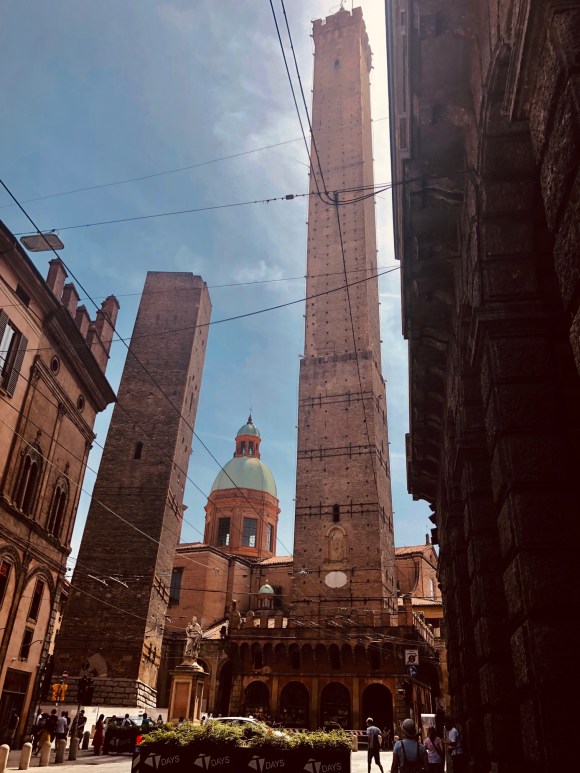
Last Saturday, my daughter and I ventured out of Venice to Bologna. The purpose of our trip was to meet Clara Ori. Clara teaches online lessons in the Italian language and she and my daughter have been working together since last September. Once or twice a week, they meet online via Preply.com.
The famous towers of Bologna.
Clara and Katherine hit it off right from the start and found it challenging to remain focused on their lessons because they had so much fun just chatting and becoming friends.
Leaving Venice at 7 a.m.
So, when Katherine was awarded her internship at the U.S. Pavilion at the Venice Biennale in late April, she knew that a visit to meet Clara would be in order.
The two had decided to arrange to meet for lunch around noon. We had subsequently planned to leave Venice early in the day, do some sightseeing in the morning, have lunch with Clara and her boyfriend, Victor, and then return to Venice in the afternoon.
Sitting close to the major square of the city, the Piazza Maggiore, I considered how I had always thought Venice felt old. After all, it was founded in 421 AD. However, strolling into Bologna, I realized that it feels and looks older and has a more primitive feel. And for good reason: Bologna was founded in 500 BC. That’s quite a difference!
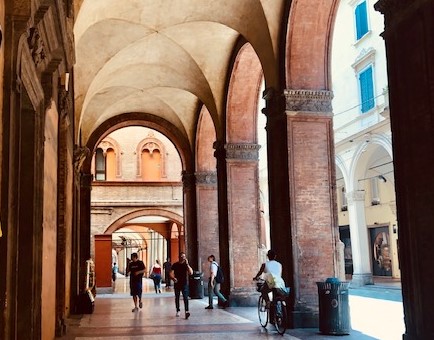
Another difference: compared to quiet Venice, Bologna is raucous with its cars and scooters. Plus, there’s all that beautiful red masonry and all the loggias, those covered archway thoroughfares along the Via Indipendenza that shade pedestrians as they saunter along the timeworn marble-paved and mosaic walkways.
Loggia along Via Indipendenza
Next to the Piazza Maggiore and its Basilica di Petronius is the Fountain of Neptune within the plaza of the same name. When my daughter last visited Bologna during her first internship in Venice, the Fountain of Neptune was encased in scaffolding for maintenance. She looked forward to seeing it in person this time.
The Fountain of Neptune
We strolled around the major buildings of the plaza and stopped inside the Palazzo d’Accursio to see the city’s Town Hall. The oldest parts of this building date to the 14th century.
It’s interesting to see where Bolognans go to pay, oh for example, their water bills. Paying a utility bill in a spot such as this would make the bill easier to pay, I would think. This facility also includes art collections, the city libraries, and a museum.
Palazzo d’Accursio… the city’s administrative buildings
The highlight of the morning was touring inside the enormous, medieval Basilica di Petronius. Inside many churches (whether a cathedral or basilica), signs request that visitors respect “the holy place” and that knees and shoulders be covered. If you don’t have the appropriate clothing, you won’t be allowed in or you may purchase for 1€ a dark blue, gauzy kimono to wear. We saw one or two women wearing these as they milled around the cathedral. Luckily, I had tucked a cardigan inside my bag for the day to wear over my tank-style dress.
In addition, for 2€, you may take pictures, presumably even with flash. So, I paid the man at a lectern-type kiosk, who in turn looped a bright orange band around my wrist. Then we were free to roam and photograph at our leisure. (Surely, the woman walking around boldly wielding her GoPro camera had paid, right?!)
Basilica di Petronius
Inside the Basilica di Petronius
Inside the Basilica di Petronius
Inside the Basilica di Petronius
You can only take so many pictures inside a beautiful cathedral before it starts to seem pointless. Pictures simply do not suffice. I would dare to say that just admiring the view with your own eyes–and not through a lens–is a much more efficient use of your time.
Even with all its incredible architecture and history, Bologna offers still more. In fact, you can experience Bologna’s charm just walking around. Find a park bench in the shade, and then sit and watch.
Sitting and people-watching
While we sat in a shaded square off the plaza, a mother, father, and two daughters were dropped off by taxi a few feet from our park bench.
The oldest teenage daughter’s flowing royal blue chiffon gown swayed in the breeze as she stood with her mother who wore an a olive-burgundy-bronze brocade knee-length chemise. The father, in a white dress shirt and gray plaid fitted trousers, seemed to be searching for someone. The younger daughter, in her awkward middle school years, stood off to the side in a champagne-colored sundress.
We loved sitting near these storefronts. Notice the hand-painted lettering!
The group discussed directions, peered left and right, walked away down the nearby alleyway, came back, and straightened their clothes. Continually rising on tiptoe to peer into the surrounding clusters of pedestrians, they never seemed to accomplish much other than to exude Italian chic.
A typical street in Bologna’s city center
After people-watching for about an hour, we started out to meet Clara, who told us she would be arriving via train from Padua with her boyfriend, Victor. (They had been to Padua that morning for Victor’s eye appointment and they had planned to return to Bologna for the afternoon.)
We headed back to the Via Indipendenza, which is closed to automotive traffic on the weekends. Pedestrians filled the brick paved boulevard and sauntered through the loggias on each side of the street. We scanned the oncoming walkers for Clara and Victor.
But here’s the thing: Clara is blind and Victor has very limited eyesight.
Spotting them was our goal; listening for Katherine’s voice would be Clara’s.
Clara had told Katherine that Victor would be very tall and that she would be using, in her words, “my inseparable white cane.”
Within a few minutes, at the very far end of the loggia, just a block from the train station, we spied them. Katherine called out, “Clara!” and that was that. We found each other!
After greetings and hugs, Clara and Victor said they would select a place where we could have paninis and visit. They knew of such a cafe just down the street. We followed the couple, Clara and Katherine chatting the entire way.
After ordering our lunches (and admittedly, following their lead was not as difficult as you might imagine), we sat down at a table outside and talked for more than an hour.
There wasn’t much time left after going to the library, so we all four headed back to the train station. We took some photos and Clara and Victor made sure to direct Katherine and I to the correct platform area to catch our 4:08 p.m. train back to Venice.
The four of us: Katherine, Victor, Clara, and me
Waiting at Bologna departures for the train back to Venice
The day had gone exactly as planned.
Our goal of meeting Clara and Victor was met and we arrived back in Venice with time to hop off the vaporetto at the Zattere for a grocery run to buy salmon fillets.
Later back in Santa Elena, Katherine made dinner (score one for Mom!)… she served the salmon with Basmati rice and her own chutney salad made with mango, avocado, cucumbers, and bell peppers. It was a delicious end to a perfect day.
Making our way across the Venetian lagoon at the end of the day
Thanks for reading! It’s becoming more and more challenging to post daily, but I’m using this trip to get in the habit of producing work daily. We’ll see how that continues. Follow my blog to see how and if I keep up.
I traveled to Venice from Skopelos, Greece, where we are staying before continuing our trip through the Peloponnese. Click here for a post from Skopelos.
In interesting times, artists create. In uninteresting times, artists still create. Regardless of the global political climate, the Venice Biennale—the Olympics of art where countries each exhibit in their own pavilion or exhibit space—continues. Sure, some countries may decline to participate from year to year or may be late in readying their exhibits (such as tumultuous Venezuela this year); however, for the Biennale… the show must go on.
A ticket good for entry at the Giardini and Arsenale portions of the Biennale cost 25€. You purchase them at a row of red ticket counters shown at left in this photo.
If you’re unfamiliar with the Venice Biennale, here’s a quick summary from the Biennale website:
The Venice Biennale has been for over 120 years one of the most prestigious cultural institutions in the world. Established in 1895, the Biennale has an attendance today of over 500,000 visitors at the Art Exhibition. The history of the La Biennale di Venezia dates back from 1895, when the first International Art Exhibition was organized. In the 1930s new festivals were born: Music, Cinema, and Theatre (the Venice Film Festival in 1932 was the first film festival in history). In 1980 the first International Architecture Exhibition took place, and in 1999 Dance made its debut at La Biennale.
A collection of brochures I collected during our visit. The Biennale brochure reads, “May You Live in Interesting Times.”
According to Biennale President Paolo Baratta, “the expression ‘interesting times’ evokes the idea of challenging or even ‘menacing’ times, but it could also simply be an invitation to always see and consider the course of human events in their complexity, an invitation, thus, that appears to be particularly important in times when, too often, oversimplification seems to prevail, generated by conformism or fear.”
Another way to put it: allow art to show you the many ways of looking at the world.
Inside the Swiss Pavilion, we watched the video entitled, “Moving Backwards.”
Last Friday (June 14), I visited the Biennale with my daughter, who is an intern in the United States Pavilion. The United States’ participation is primarily a function of the Department of State, which “supports official U.S. participation at select international art exhibitions called biennales. The Department’s support ensures that the excellence, vitality, and diversity of American arts are effectively showcased abroad and provides an opportunity to engage foreign audiences to increase mutual understanding.” In other words, exhibiting at the Biennale is another way to build and maintain positive relationships around the world.
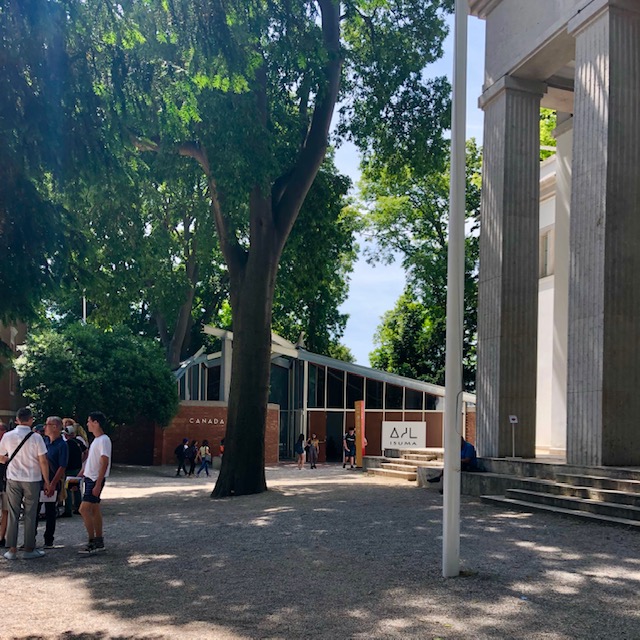
The Canadian Pavilion is shown on the left in photo above. Their media company showcasing inside is called Isuma. The German Pavilion stands on the far right.
As for the U.S. Pavilion’s intern program, the Peggy Guggenheim Collection, a well-known modern art museum in Venice, handles the hiring of the interns who provide guarding of the exhibits, inform visitors about the various works, and generally are the main points-of-contact for visitors touring through the pavilions. (Two years ago, my daughter served an internship at the museum; when they issued a call for former interns interested in returning to work the Biennale, she quickly applied.)
The German Pavilion exhibit: industrial, cold, and futuristic.
We arrived at the portion of the show held on the ground of Venice’s Giardini (Italian for garden). Visitors can see another section of the show at the adjacent Arsenale. In addition, more pavilions are scattered throughout the city. For example, we walked by the door to the Mongolian exhibit in a dark, narrow street somewhere in the San Marco area of the city.
From the Russian Pavilion. These figures were only one component to the entire Russian offering, which was inspired by Flemish painters.
During our three-hour visit, we saw fourteen exhibits out of the 79 participating in the Biennale this year. That doesn’t sound like that many, does it? Especially when you know there are art lovers who allot several days to see all the exhibits. To them, I say, “Go you!”
However, since I only had four full days in Venice, and one of those was spent in Bologna (see my next post!), we prioritized.
Waiting in line to the British Pavilion.
Plus, we knew that a visit to the best gelato in town, Suso, was in order for the afternoon. This would require a thirty-minute vaporetto ride down the Grand Canal from the Giardini. Sheesh… the price we pay for good gelato!
Works by Cathy Wilkes inside the British Pavilion.
Enjoy these photos! I’ve attempted to add some details in the captions and, looking back now, I should have written this post immediately after our visit to better capture the ambiance of our visit. But when one is in one of the most beautiful cities in the world, you want to get out and see it—not stay in and write about it.
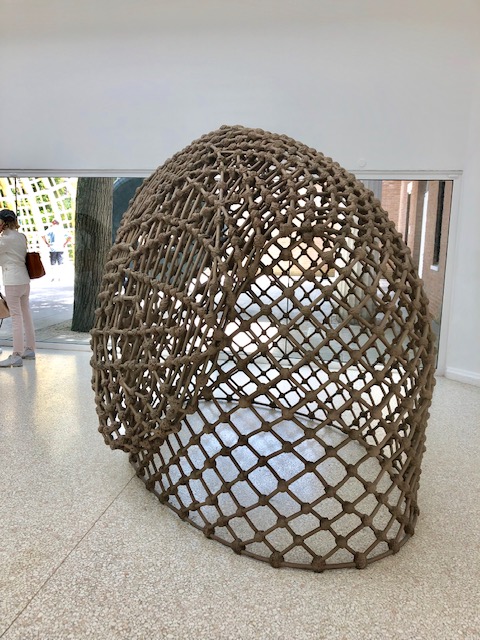
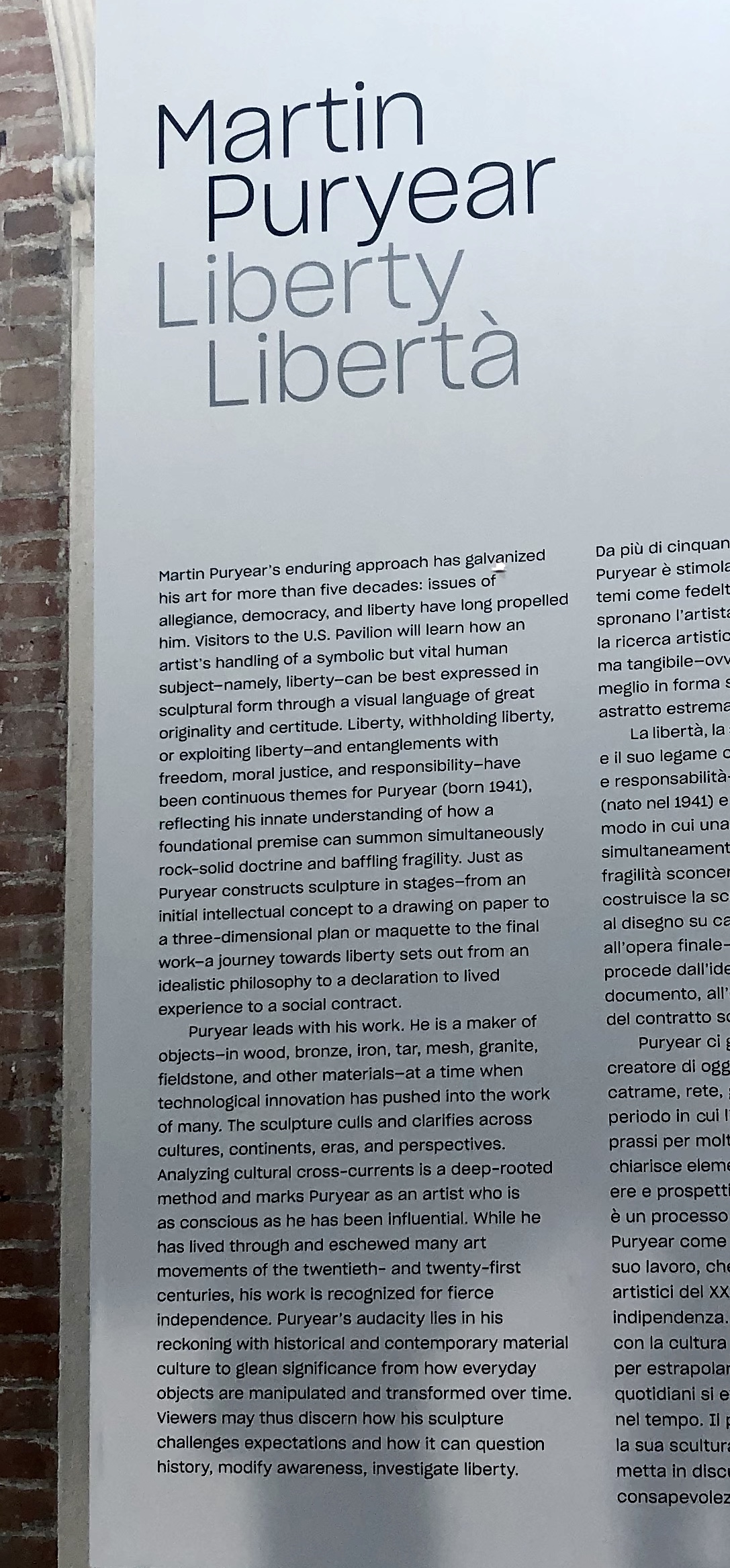
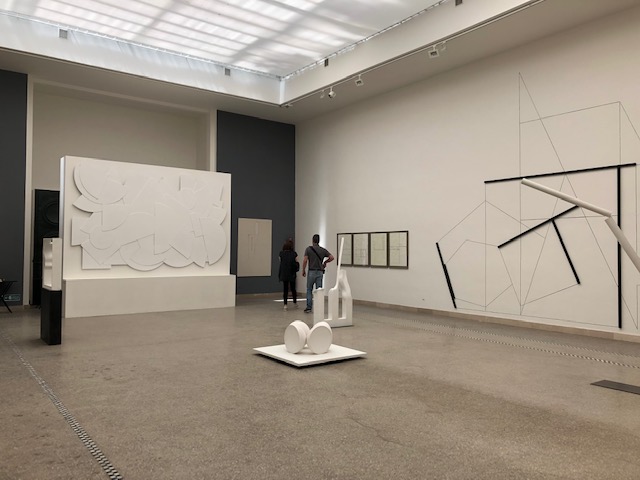
The front of the U.S. Pavilion, which features the work of Martin Puryear.
And now, the back of the opening piece.
A red Phrygian cap, also known as a French liberty cap. This is made of wood. My daughter says everyone wants to touch it.
A
A Confederate Civil War cap. Look in the crosshairs to see yourself.
Bronze, but doesn’t look like bronze.
Detail of the bronze.
The gallery label for the Martin Puryear exhibition inside the U.S. Pavilion. I do not have photos of every piece in the show. There were several more.
I figured that if we are visiting Greece this summer, we should probably go see the Greek pavilion.
Walking on glass cups inside the Greek pavilion.
Countries from around the world participate. Here’s the Uruguay Pavilion. Not sure why I don’t have a photo from inside. No offense, Uruguay.
Work inside the Czechoslovakia Pavilion.The Nordic countries participate in one exhibition hall. Every Biennale, one of those nations also has its own additional pavilion. This year, it was Finland’s turn, but I did not take pictures of that show.
Inside the Nordic Pavilion.
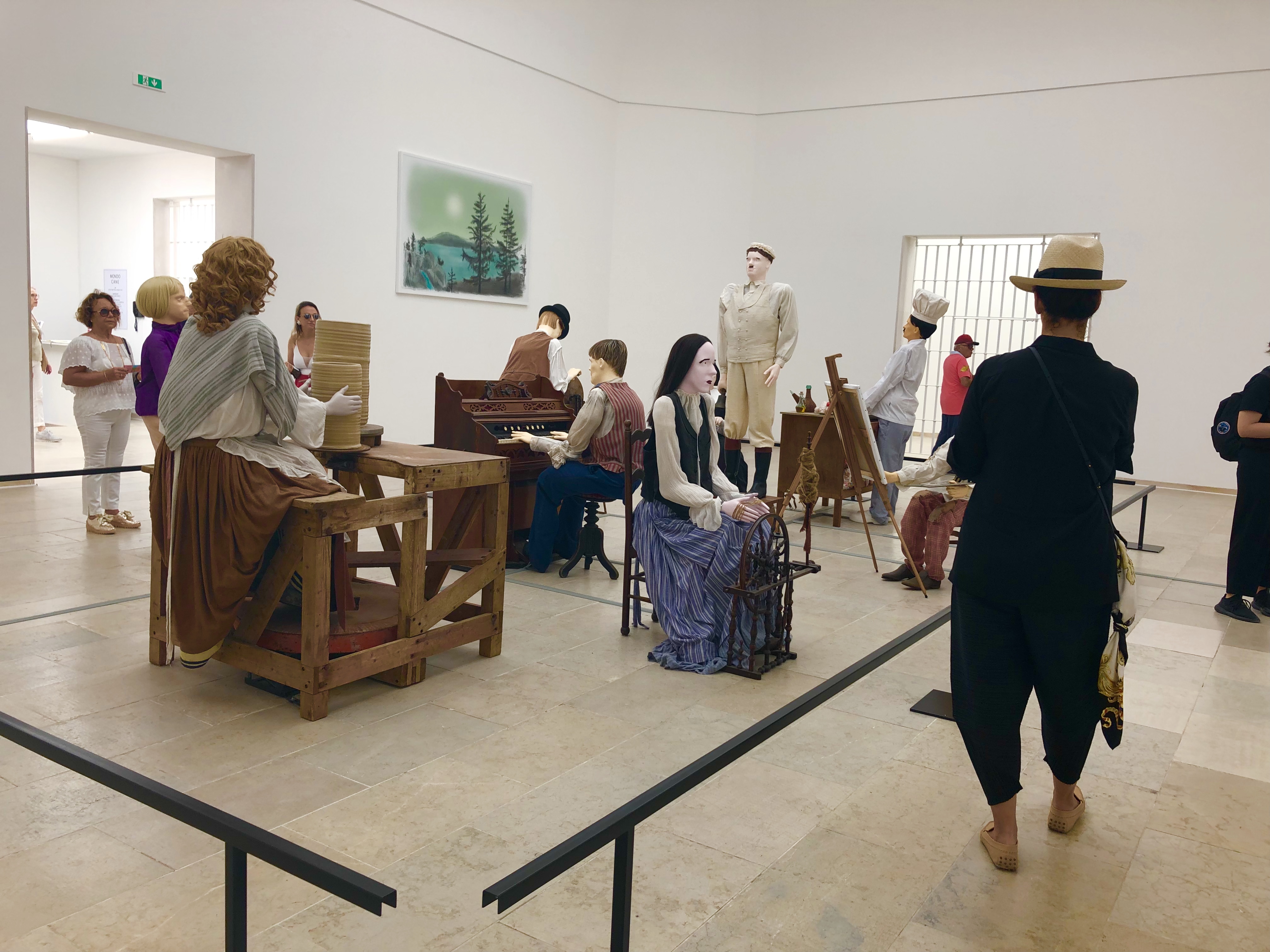
This assemblage inside the Belgium Pavilion was eerily irresistible.
This installation within the Belgium Pavilion was eerily fascinating. Every figure is moving and making something… pottery, bread, cloth, music, a painting. The taskmaster controls it allwith the ringing of the bell.
The Egypt Pavilion
Japan Pavilion
A video piece inside the Japan Pavilion.
We walked over this canal to see the back portion of the Giardini area of the Biennale.
Thanks for reading! As you can see, there is too much to see at the Venice Biennale without spending days there. In addition, to really study the art and understand its motivation and full message deserves much more time than we were able to devote. Still, if you have the desire to see art on a global scale, the Venice Biennale is where you need to go. Click like if you enjoyed this post, and feel free to leave a comment or follow my blog for my next post from Bologna!
On Wednesday night (June 12), Mitch and I hiked across Skopelos Island from Skopelos Town to the little seaside town of Panormos. The three-hour hike was organized by Heather Parsons, founder of Skopelos Trails.
I had heard of Parsons last fall when I found her in an online search. It seems when you research Skopelos Island, her name will eventually surface. Her organization, Skopelos Trails, is dedicated to restoring, maintaining and improving the ancient stone pathways, called calderimi, that are sprinkled across the island.
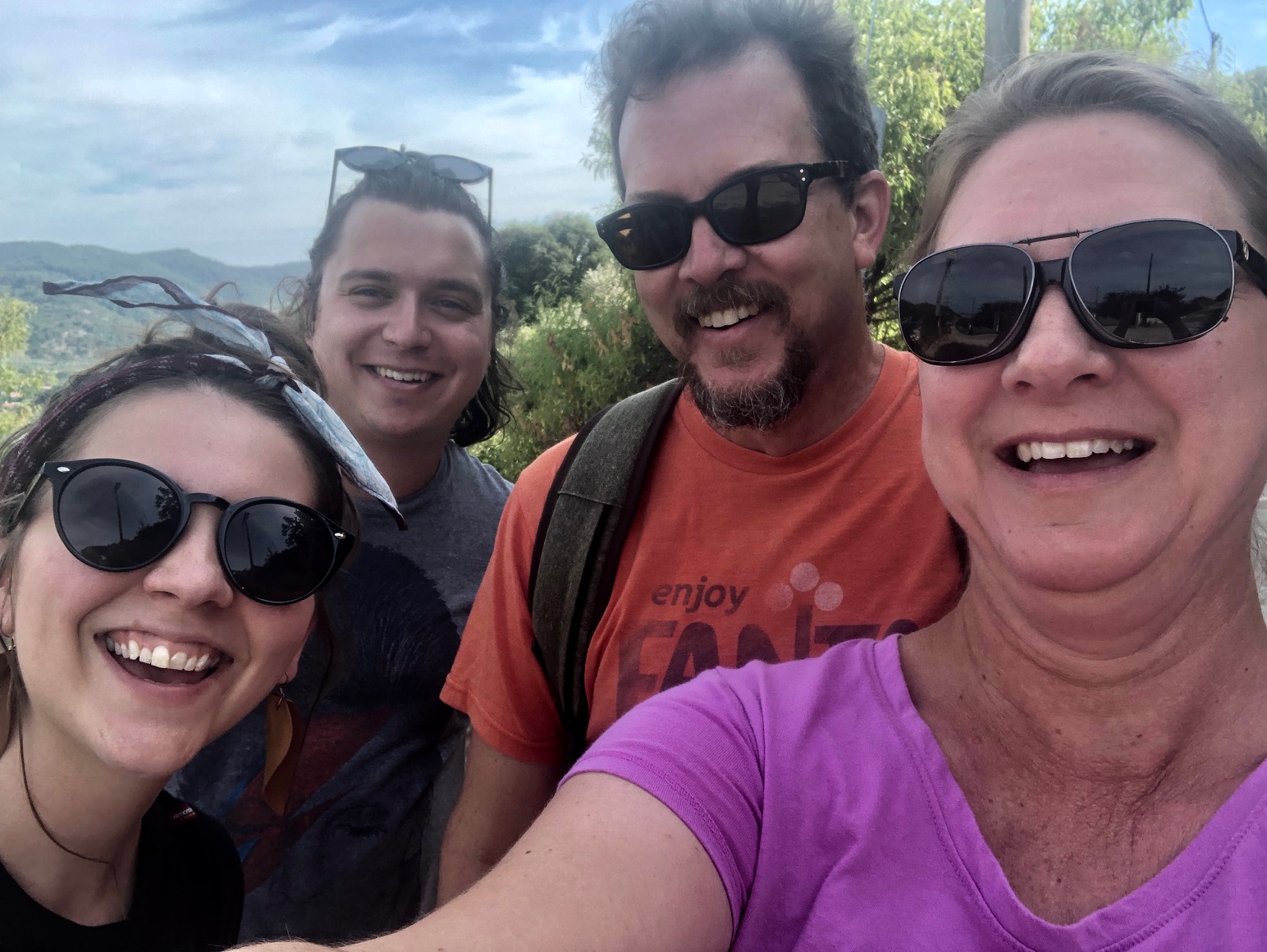
Victoria Rose Phillips, Grayson Phillips, Mitch and I
Parsons has written and published a book as well, called Skopelos Trails. It shows the paths for the island’s many walking and hiking trails. Parsons has provided detailed—almost step-by-step directions— for finding and following the paths either on your own or with guidance from her or her business partner and our guide, Emmanuel.
According to a post on Facebook just today, the local forestry department recently asked Skopelos Trails to provide them with details of all the closed trails.
In the post it says that Emmanuel had drawn in by hand 116 km of trails on the department’s terrain map. Clearly, Skopelos Trails knows the land better than most.
Parson’s book also contains hand-drawn illustrated maps that appear alongside the directions and description of the Trails. The illustrations may not be drawn to scale and if a business was used as a landmark on the map, it may have changed, especially if you are using an older edition of the book.
The trails are marked and rated by level of difficulty and the trail we walked Wednesday night, the Coast to Coast Trail, is considered “not strenuous,” or at least that’s how Parsons described it to me in her reply to an email I had sent her as we were making arrangements. (Since I had a 7 a.m. ferry ride to catch the next morning, I wanted to make sure the three-hour Coast to Coast Trail would not wipe me out for the next day’s travel to Venice to see my daughter.)
Starting off from Skopelos Town below.
With Parsons’ “not strenuous” description, we decided to sign up for the 25€ hike, but we opted to take the bus back later from Panormos to Skopelos Town instead of going to a restaurant with the other hikers. I would have loved to socialize more with the others, since during the hike we were able to visit for only a short while.
The plan was to meet at 5 pm at Kahili’s Bakery and Cafe down on the harbor front street or at 5:15 further up the hill near our apartment, where the calderimi, which started just down the hill a small distance, passed by.
Mitch next to a small family Greek Orthodox church
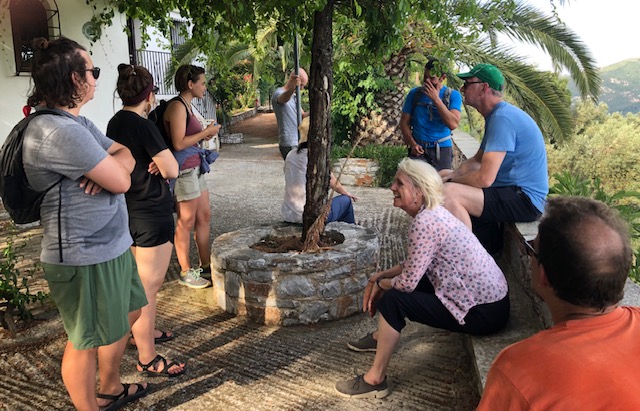
As we stood near the telephone pole with a Skopelos Trails trail marker (a 3″- diameter white circle with a yellow hiking boot footprint), we began to hear huffing and puffing from an approaching group.
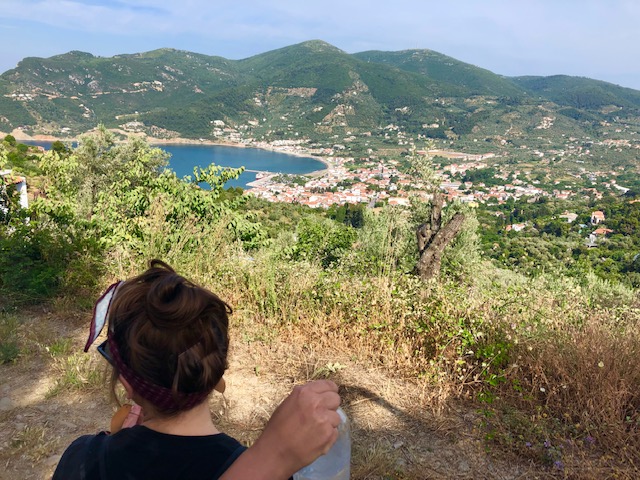
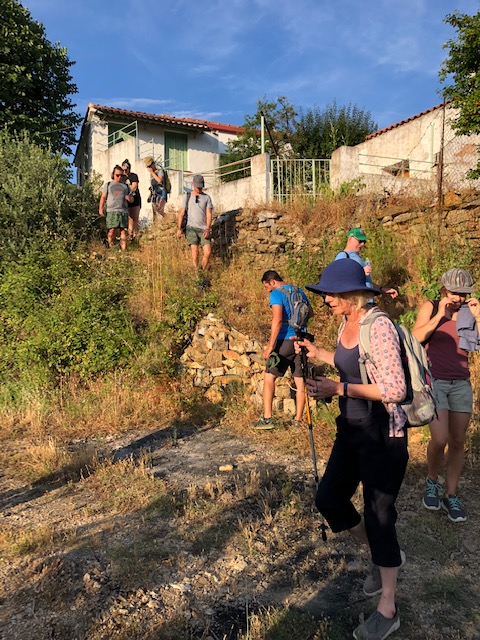
To our left, trudging up the hill with the entire town of Skopelos spread behind them as a backdrop, proceeded two couples from England; Anna, a young Athens native who lives in Skopelos; a woman from Skopelos who had built a brand new home in the mountains of Skopelos; and our guide, Emmanuel.
Our addition to the group included Mitch and I plus Grayson and Victoria Phillips, who is serving an artist residency at Skopart.
In total, there were eleven of us—quite a good number for an end-of-day stroll (and I use that term loosely) across the island.
The previous Thursday, according to the Skopelos Trails’ Facebook page, a group of five hiked the path starting at 9 a.m.
It would have ended in the heat of the day, so maybe an evening hike, with its cooler temperatures during the latter two-thirds of the hike, makes for a more tempting outing and attracts more participants.
One of the natural springs we came upon
We did stop occasionally during the hike— about five times. During our stops, we would take a photo, drink water, or refill our water bottles at a natural spring. There are several of these springs on the island and many islanders use them for their drinking water.
The water was cold and clean, Emmanuel assured us. Our bottles were nearly full, so we didn’t drink from the spring, but I wish I had. Should have tasted natural Greek spring water. How often do you get to do that? I did scoop up some of the icy water and rubbed it on my arms and neck for a cool-down, though.
We arrived right on schedule at 8:15 pm in Panormos, having traversed the island through olive groves, along stone-walked paths, on top of stone-bordered terraces, alongside pastures where goats and an occasional horse roamed.
The hike took a solid three hours and fifteen minutes. I’m writing this post in Venice; when I return to Skpelos, I’ll look into my copy of Skopelos Trails to see how many kilometers we covered. I’m guessing right now about five.
We also came upon five tiny and well-maintained Greek Orthodox churches. Our guide told us that many of the churches were built by families so their members would have a central location for burial. In at least one, a single candle glowed in the darkened nave.
I was tired when it was over. I would definitely label the hike “moderately strenuous.” It’s very rocky, and very steep in parts, and in many places we were walking in thigh-high grasses or on steep grades that were covered with a cushion of small, smooth leaves (a eucalyptus variety?) that made a few of us nearly fall.
Even though it was a challenging three hours, it was very enjoyable literally getting off the beaten path to see the rural Greek countryside and rugged, forested mountains, which are particularly unique to Skopelos.
We also enjoyed meeting and visiting with people from around the world. As Judy, an British hiker from Bristol said, “It’s so interesting when people from all different parts of the world with different lives come together to connect in this way.”
Thanks for reading! This was a fun experience and when I return to Skopelos next week, Mitch and I hope to take another (probably shorter!) hike using the Skopelos Trails book. Follow my blog for more posts from our summer travels and feel free to leave a comment about some interesting hikes you’ve taken recently.
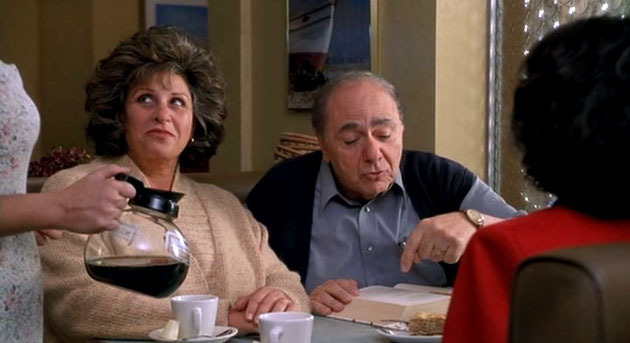
You know in the movie My Big Fat Greek Wedding when the father, Gus, explains how every English word can be traced back to the Greek language? Here’s what Gus says in the movie: Now, give me a word… any word… and I show you, how the root of that word… is Greek. How about “arachnophobia”? “Arachna,” that comes from the Greek word for spider… and “phobia” is a phobia, it means “fear.” So, “fear of spiders.”
Well, he’s right on that point when you look at the name for the group of islands that my husband and I are visiting: the twenty-four Sporades Islands along the east coast of Greece. (Actually, we’re only visiting one of those islands, Skopelos.)
Only four of the twenty-four Sporades Islands are permanently inhabited: Skiathos, Skopelos, Alonnisos, and Skyros.
When you look at the twenty-four islands that make up the Sporades on a map, they appear to have been scattered into the Aegean Sea. Picture in your mind seeds or spores that have been tossed across a field by a farmer. Or consider the seemingly random process in which cells scatter and germinate. It’s a very visual and literal way to describe these islands.
Now let’s do what Gus would do.
Ever think about the English word “sporadic”? According to Merriam-Webster, this word “describes the distribution of something across space or time that is not frequent enough to fill an area or period, often in scattered instances or isolated outbursts.”
See? The English word sporadic can be traced directly back to the “Guh-leek,” as Gus would say.
For even deeper backstory, there’s this from Merriam-Webster:
Sporadic “comes from Medieval Latin sporadicus, which is itself derived from Greek sporadēn, meaning “here and there.” It is also related to the Greek verb speirein (“to sow”), the ancestor from which we get our word spore (the reproductive cell of a fungus, microorganism, or some plants), hinting at the seeming scattered nature by which such cells distribute and germinate.”
So when when the islands were created or “sown,” they were scattered like spores. What better name to call these islands other than the Sporades Islands?
I’m a word nerd. I love learning where words come from and how they have changed over time. Click “like” if you enjoyed this post and leave a comment about a word you find interesting. Follow my blog for more posts as we continue our month in Greece.
I thought it might be interesting to write a post about our lodging here in Skopelos Town, sometimes called the Chora, on Skopelos Island in Greece.
Here’s our front door.
We’re staying in a room that sleeps three people at Mayorka Studios, which is located just a three-minute walk down the hill from Skopelos Foundation for the Arts (Skopart). This is the arts center where my husband Mitch is pursuing a three-week artist’s residency.
The studio we’re staying in runs €40-80 night, depending on the time of year. July and August are the most expensive times; it varies greatly after that. In addition, if you come to the island to participate in a Skopart artist residency, your rates may be lower.
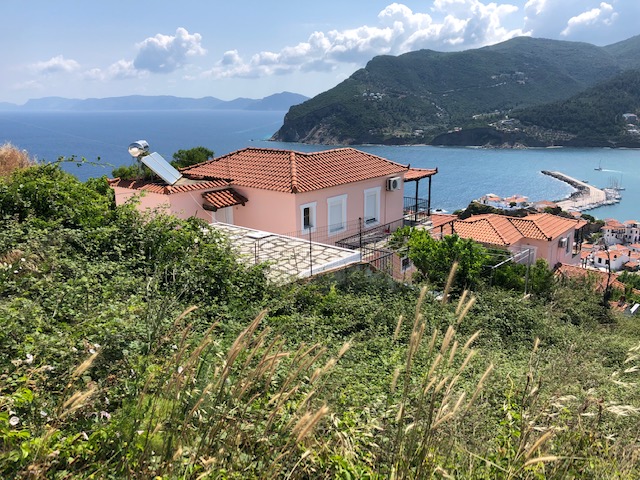
Mayorka Studios comprises twelve units perched high on the hill that overlooks Skopelos Town below. In fact, if you look in the picture below, you can see the apartments in the extreme upper left corner. They are not white, but instead are painted a light coral color and have red tile roofs.
You can see Mayorka Studios in the very top left of this picture, right along the edge.
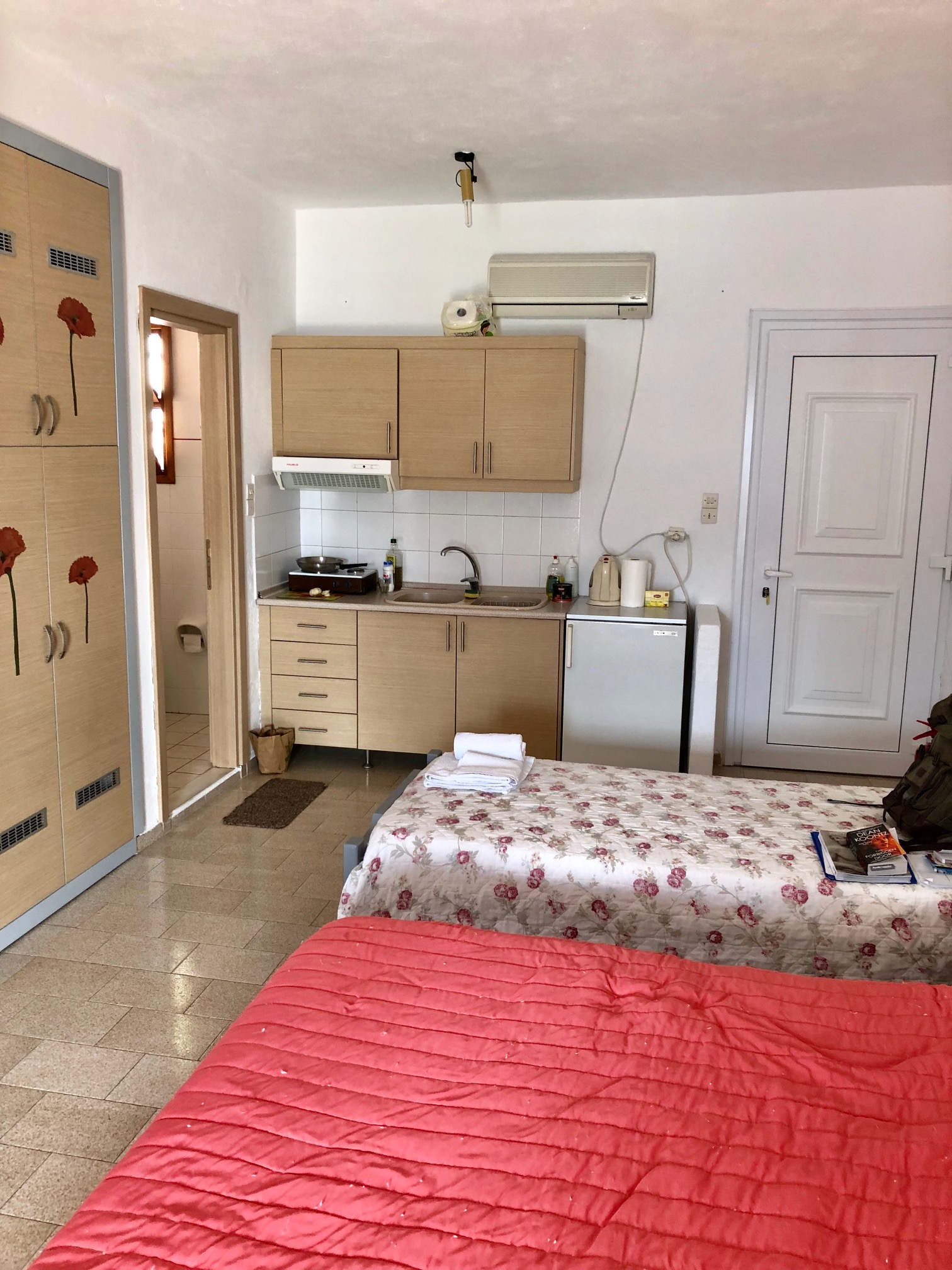
Our room has a king-size bed and a twin. It also has a limited kitchen with a few pots and pans, an ice cold fridge, double sink, a small two-burner stove, …
and a kettle that boils water in no time flat.
The entrance. You can park on the lot there by the scooter, but no one here right now has a car.
The kitchen has the main appliances we need, but not a microwave or oven; however, I don’t think that microwaves are as popular here as they are in the U.S. As for the oven, yes, I would like to have one of those–even more so than a microwave, actually– but oh, well. My daughter’s apartment during her first internship in Venice didn’t have an “oh-ven” either.
Rather plain Jane, but perfectly adequate.
The kitchen also contains the basic utensils needed, but we did have to go buy a sharp serrated knife for slicing tomatoes. (We have Greek salads with nearly every meal to make sure we get our daily allowance of feta cheese.)
The bathroom has a small shower and a hand-held shower head that hangs over the faucet. The shower at our AirBnb in Athens featured this same type of shower setup, so it must be common here. It’s a little awkward to get used to… you’re never just standing under flowing water. You have to hold the shower head. Kind of a pain. Man, am I a whiner or what?!
And now for the other angle.
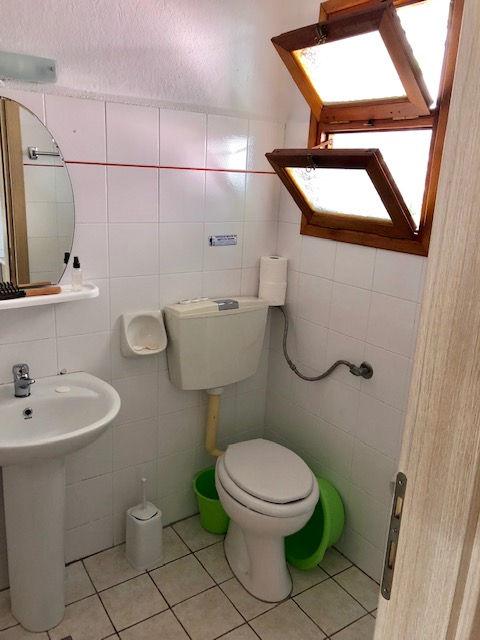
The toilet functions, except for “the rule.”
That would be the “never flush paper” rule, which was also awkward to get used to. Flush NO paper, not even the dirtiest paper? Nope. Apparently, it clogs up the pipes. So, instead of tossing your paper into the toilet, you just toss it into the lidded trashcan. I noticed this same rule at a hillside restaurant near the Acropolis in Athens. That place had a large lidded basket for the used paper.
Our king-size bed is very comfortable and firm. There are plenty of good pillows also. The place is spotless thanks to the housekeeper who drops in every morning around 10.
Yep, that’s a bathroom. Notice “washing machine” next to toilet.
The TV (an old tube version) doesn’t seem to work. I suspect that the batteries in one of the remote controls are dead; however, I still can’t seem to get the little black box that sits on top of the TV to be friends with the actual TV.
Shower with hand-held faucet. This was a new one for me.
But it doesn’t really matter, since the one night I was able to get something to watch, it was a soccer game with a Greek-speaking commentator (duh). So it was no great loss, but still. I get a kick out of watching TV when I’m in another country. I think it’s fun to learn what people in different countries are interested in, their perspectives and priorities.
As for laundry, we wash it by hand.
Yes, you read that right. In fact, there’s a lime green plastic washtub wedged between the toilet and the wall specifically for the purpose. We take the tub, put it on the floor of the shower, turn on the water, sprinkle in some powdered Tide for handwashing and get to washing.
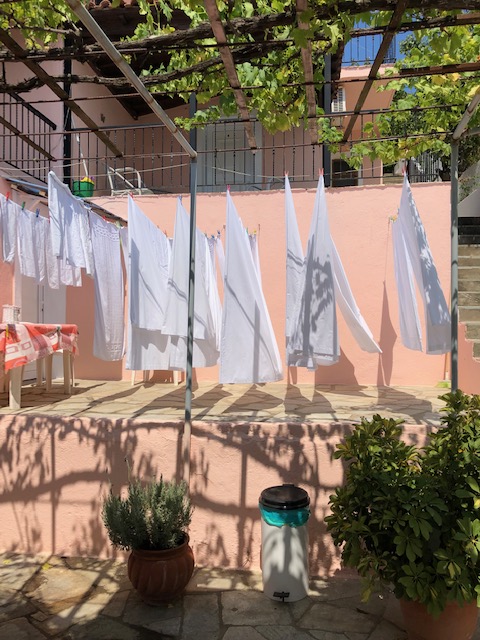
The housekeeper dries the sheets in the breeze.
Then we rinse (sometimes in the tub, sometimes just in running water) and hang the wet duds on the clothesline on our balcony just like everyone else.
Outside our door
It works really pretty well, and yes, saves a lot of energy. I can handle not having a dryer, but a washer really would be nice. Our place in Athens had one, and even though we were there for only two nights, we washed a load of laundry. (And honestly, I do think it might be a little unusual to not have one in our unit.)
So even though we handwash our own clothes, can’t flush toilet paper, and the TV doesn’t work, this place is still the bomb. And that’s because…
it’s all about the balcony.
The view is absolutely incredible. In fact, who needs a TV when you have a front row seat to the best show in town all day and all night?
View from the balcony
Watching the ferries, tour cruises, and boats of all shapes and sizes sail in, unload, and sail back out will probably be one of my best memories from this entire trip. We can also see people way down there walking up and down the harbor front street. And late at night, when the balcony doors are open (and they usually are, because it’s quiet and safe up here), you can hear live Greek folk music rising on the breeze from the Paganitsa Tower taverna. It’s heavenly.
I guess you could argue that the balcony is our only sitting area, however. You’d be right. There is no indoor dining area, for example, or an easy chair to sit in.
If you stand along the railing on the balcony, this is the view of the town to the right of the port.
Last Saturday night, during the second night of the music and dance festival, when students were showcasing their modern dance routines, someone must have been performing to “Perfect” by Ed Sheeran. Those crazy-good chords floated up from the performance at the City School down below…
another nice memory.
So, except when we’re in the kitchen fixing meals, if we’re in the apartment, then we’re on the balcony sitting in the two wicker rattan love seats, looking out at the Aegean Sea, and maybe sipping a glass of wine. There’s a glass-topped table there and that’s where we have breakfast, lunch and dinner.
This just shows the top of the apartments. Notice the solar water heater on the top unit. Each unit has one of these. Hottest water ever!
We’ve dined out only twice in the week and a half that we’ve been here. We head to the grocery store downtown (or catch a ride with friends from Skopart) whenever we need to pick up a few things. I know we’ll eat out a few more times eventually, but I’m perfectly fine with eating in, shopping at the little market, and buying just what we really need for that day.
That seems to be the way they do things here.
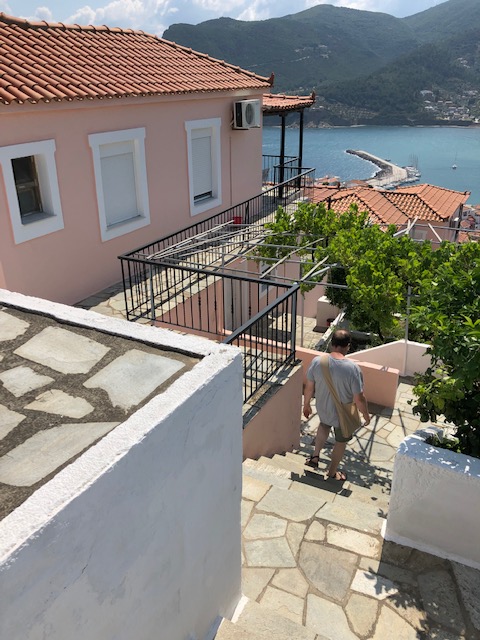
Mitch walking down to our apartment.
Right outside our door. Almost to the killer stairs… see next photo.
A shot of the studios from down below on the stairs that descend all the way into Skopelos Chora. These stairs are killers. Wear good shoes. Walk slowly so your knees aren’t jarred with every step. You’ll get very fit just walking around Skopelos on a daily basis.
Thanks for reading! I thought it would be interesting to show our digs while we’re on Skopelos Island in Greece. The rates for lodging are highest in July-August; however, Greece is still relatively inexpensive compared to other locales. Click “like” if you found this interesting and feel free to leave a comment. If you’ve stayed in Greece before, what was your experience like?




















































 Marilyn Yung